You’ve stored your wedding dress carefully, wrapped in tissue paper and tucked away in what you thought was the perfect preservation box. But when you open it months or years later, your heart sinks. Yellow stains have appeared seemingly out of nowhere, creeping across the delicate fabric like an unwelcome ghost of celebrations past.
Here’s the unsettling truth: your gown wasn’t as clean as you thought it was. Those invisible stains you couldn’t see on your wedding day are now revealing themselves, and wedding dress oxidation is turning your cherished memories into a conservation nightmare.
Let’s uncover what’s really happening to your gown and what you can do about it.
What Causes Wedding Dress Yellowing?
The Science Behind Invisible Stains
Not all stains are visible to the naked eye. In fact, some of the most damaging culprits are completely invisible when they first land on your dress. These hidden threats include:
- Champagne and white wine – Clear when spilled, but packed with sugars that oxidize over time
- Perspiration – Contains oils, salts, and proteins that yellow as they age
- Body oils and lotions – Transfer from skin contact throughout your special day
- Makeup and deodorant – Even when carefully applied, residue finds its way onto fabric
- Food particles – Microscopic bits from cake, appetizers, and dinner
The problem? These substances may look harmless initially, but they undergo chemical changes when exposed to air, light, and heat during storage. This process, called oxidation, transforms invisible residues into those telltale yellow or brown stains.
Why “Clean Enough” Isn’t Clean Enough
Many brides make the mistake of doing a quick visual inspection after their wedding. If the dress looks clean, they assume it’s safe to store. This is precisely when invisible stains become your worst enemy.
Think of it like cutting an apple and leaving it on the counter. It looks fine at first, but within hours, oxidation turns the flesh brown. The same chemical process affects your wedding gown, just on a slower timeline.
The Oxidation Timeline: When Yellowing Happens
Immediate to 6 Months
During this period, invisible stains begin their transformation. You might not notice anything yet, but the clock is ticking. Sugars from beverages start to caramelize, and proteins from perspiration begin breaking down.
6 Months to 2 Years
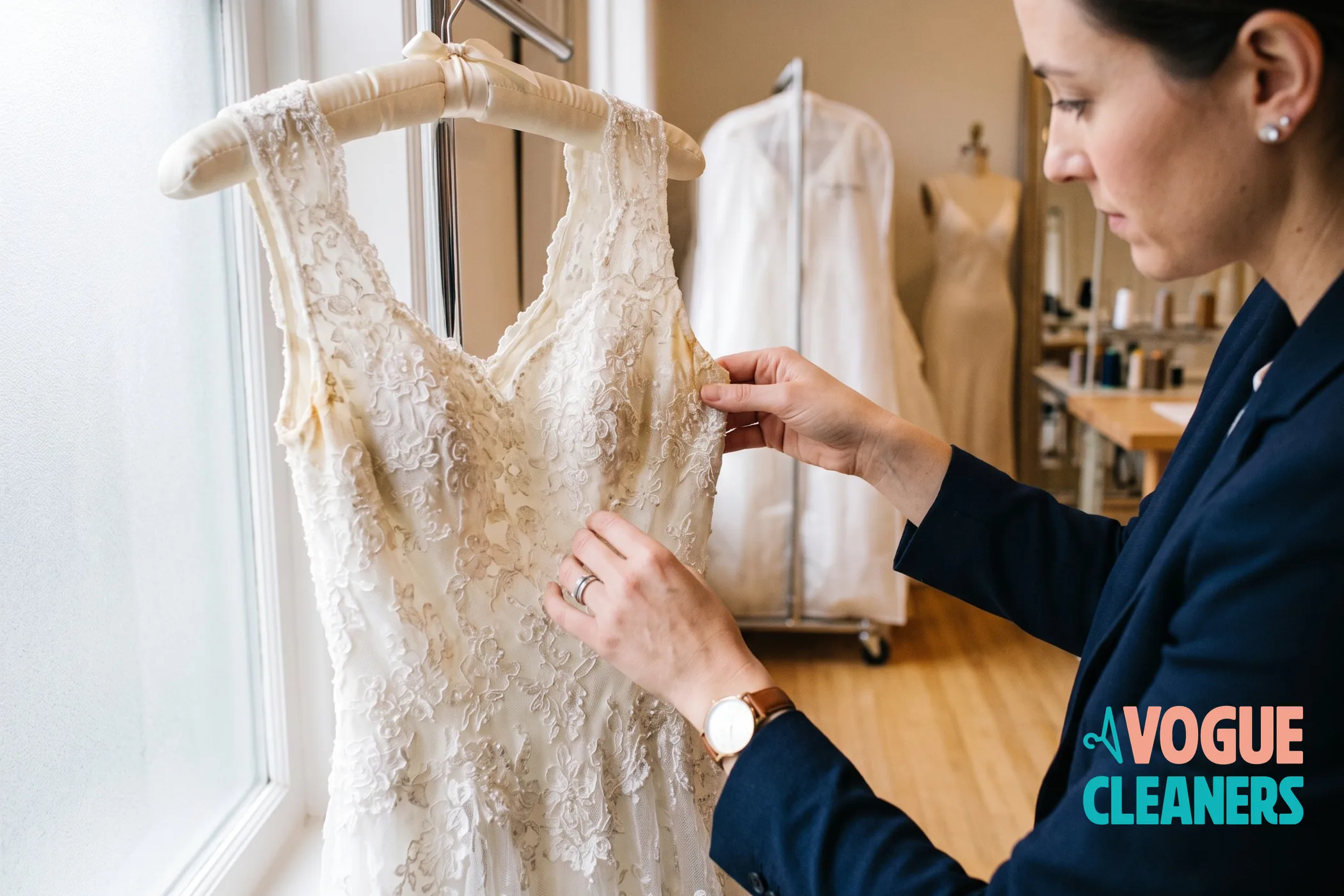
This is when most brides discover the damage. Yellowing fabric becomes visible, typically appearing first in areas with the most contact:
- Underarm areas (perspiration and deodorant)
- Neckline and collar (makeup, perfume, and body oils)
- Hem and train (outdoor dirt, grass stains, and food spills)
- Bust and waist areas (body oil transfer)
Beyond 2 Years
At this stage, oxidation has set in deeply. The chemical bonds between stain molecules and fabric fibers strengthen, making professional stain removal significantly more challenging and, in some cases, impossible without damaging the delicate material.
Common Culprits: What’s Really Staining Your Gown
The Reception Villains
Your wedding reception is basically a perfect storm for fabric damage:
Sugary substances oxidize into yellowish-brown stains. Even if you dodged the cake-cutting catastrophe, sugar particles float through the air and settle on fabric.
Alcohol-based drinks may evaporate, but they leave behind residues that attract dirt and accelerate oxidation.
Protein-based stains from foods, champagne toasts, and even saliva (from that emotional speech) bond with fabric fibers and darken over time.
The Hidden Enemy: Your Own Body
This might be uncomfortable to hear, but your body is one of the biggest threats to your wedding dress:
- Perspiration contains urea, fatty acids, and salts that yellow dramatically
- Natural body oils migrate from skin to fabric with every hug, dance, and movement
- Dead skin cells (yes, really) accumulate throughout the day
Even the most composed bride perspires during a full day of celebration. It’s natural, normal, and nearly impossible to prevent.
Environmental Factors
Storage conditions accelerate wedding dress oxidation:
- Light exposure – UV rays break down fabric and set stains
- Heat and humidity – Create ideal conditions for chemical reactions
- Poor air circulation – Traps moisture and accelerates deterioration
- Acidic materials – Regular tissue paper and cardboard boxes contain acids that yellow fabric
Why DIY Cleaning Isn’t the Answer
The Pinterest Trap
You’ve probably seen articles promising that you can clean your wedding dress at home with common household items. Here’s why that’s risky:
Delicate fabrics demand specialized care. Silk, satin, organza, tulle, and lace each require different cleaning approaches. Using the wrong method can cause irreversible damage.
Home cleaning can set stains permanently. Heat from washing machines or irons can chemically bond stains to fibers, making professional removal impossible later.
You can’t see what you’re dealing with. Invisible stains require specialized lighting and expertise to detect and treat properly.
The Cost of Mistakes
A professional cleaning might seem expensive, but consider the alternative. Attempting DIY stain removal on a dress worth hundreds or thousands of dollars can result in:
- Fabric discoloration or bleaching
- Shrinkage or stretching
- Damaged beading, sequins, or embellishments
- Torn delicate laces or seams
- Complete loss of the garment
Is saving $200 worth risking a $2,000 dress?
Professional Stain Removal: What Actually Works
The Expert Difference
Professional wedding dress specialists use techniques unavailable to consumers:
Specialized solvents designed specifically for bridal fabrics break down oxidized stains without damaging delicate materials.
Wet cleaning methods use temperature-controlled water and pH-balanced solutions to lift protein-based stains.
Spot treatment addresses individual stains with targeted approaches based on stain type and fabric composition.
Museum-quality preservation using acid-free materials, climate control, and proper storage techniques.
What to Look For in a Specialist
Not all dry cleaners can handle wedding dresses. When choosing a professional stain removal service, ask:
- Do you specialize in wedding dress cleaning and preservation?
- What methods do you use for invisible stain detection?
- Can you provide references or before-and-after examples?
- What’s your policy if stains can’t be completely removed?
- How do you package dresses for long-term storage?
The Inspection Process
A qualified professional will:
- Examine the entire dress under specialized lighting to reveal invisible stains
- Test fabric samples to determine the safest cleaning approach
- Document all stains and damage with photos before treatment
- Provide a detailed estimate explaining what can realistically be achieved
- Use multiple cleaning techniques tailored to different stain types and fabric areas
Prevention: Protecting Your Investment
Immediate Post-Wedding Steps
The absolute best time to address invisible stains is immediately after your wedding. Here’s your action plan:
Within 48 hours: Get your dress to a professional wedding gown cleaner. The fresher the stains, the easier they are to remove.
Don’t wait: Every day increases oxidation risk. Stains that would lift easily on day one become stubborn problems by week two.
Document everything: Take photos of any visible stains or damage for insurance purposes.
What to Do Right After the Wedding
While waiting for your cleaning appointment:
- Hang your dress in a cool, dry, dark place (not in a plastic garment bag, which traps moisture)
- Don’t attempt spot cleaning – you might set the stain
- Keep it away from direct sunlight, heat sources, and humidity
- Inform your cleaner about any specific incidents (wine spills, grass stains, etc.)
Long-Term Preservation
Once professionally cleaned, proper storage prevents future yellowing fabric issues:
Use acid-free materials – Regular tissue paper and cardboard contain acids that cause yellowing over time.
Control the environment – Store in a cool (65-70°F), dry (50% humidity), dark location.
Avoid plastic – It traps moisture and doesn’t allow fabric to breathe.
Check periodically – Inspect your dress every year or two to catch problems early.
Consider museum boxes – These use archival-quality materials designed for long-term textile preservation.
The Bottom Line: Act Now, Thank Yourself Later
Wedding dress oxidation isn’t inevitable, but it’s preventable only if you act quickly and choose professional care over DIY experiments or procrastination.
Your wedding dress represents one of the most significant purchases and emotional investments of your life. It deserves protection that goes beyond tucking it in a closet and hoping for the best.
Whether you plan to preserve your dress for sentimental reasons, pass it down to future generations, or even resell it, professional cleaning and preservation are non-negotiable steps. If your gown already shows marks, our guide to the five most common wedding dress stains walks through how we lift each one.
Don’t let invisible stains rob you of your cherished memories. The gown that made you feel beautiful on your special day deserves to stay that way.
Take Action Today
If your wedding was recent, schedule professional cleaning this week. If your dress is already in storage, consider having it inspected for hidden damage.
The cost of prevention is always lower than the heartbreak of discovering irreversible damage years down the line. Your future self will thank you.
Ready to protect your wedding dress from yellowing and oxidation? Schedule a pickup or sign up for Vogue Valet today and enjoy expertly cared-for clothes without the hassle.