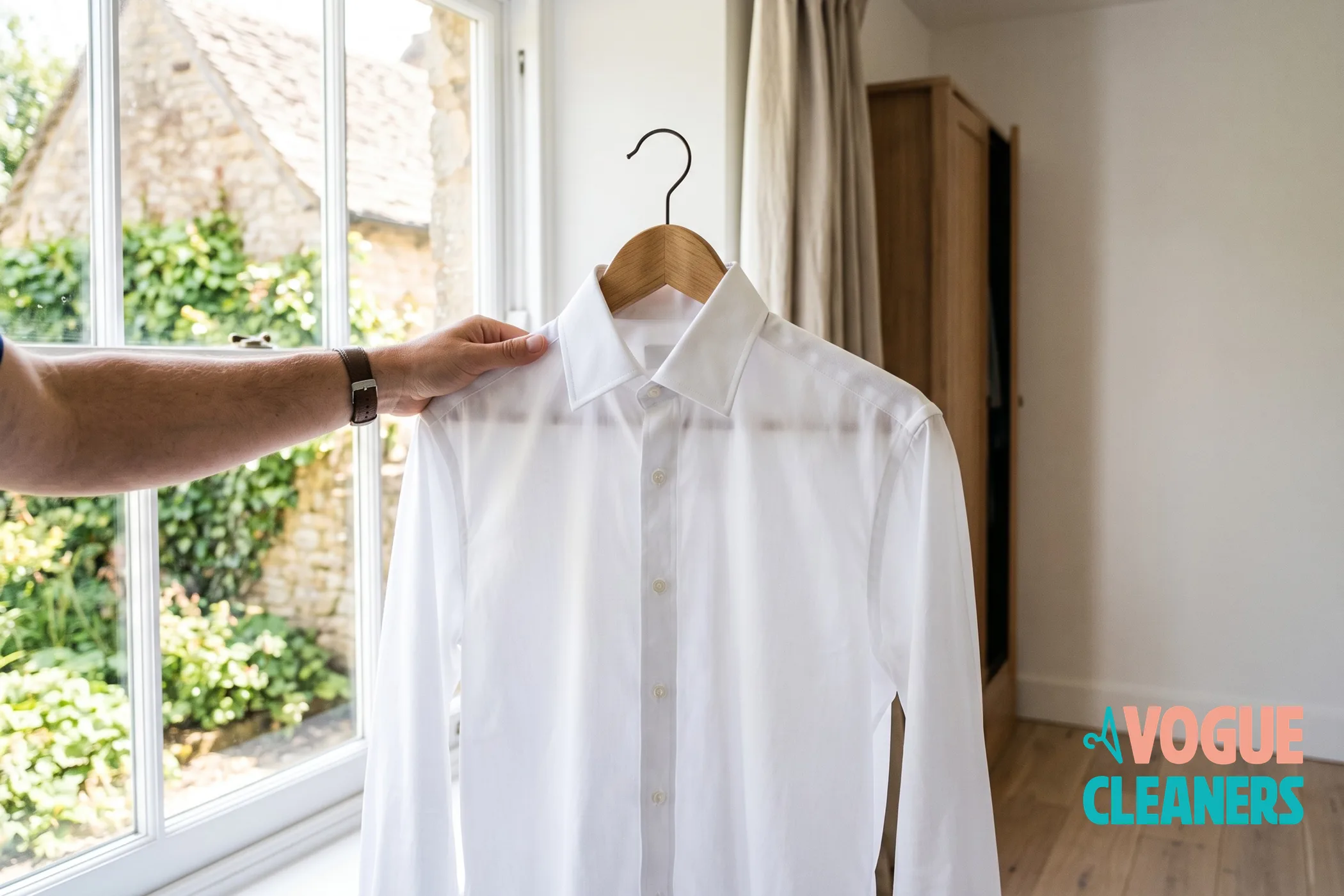
If you live through a Sacramento summer, you know the drill: you pull a crisp white dress shirt from the closet and find stiff yellow patches under the arms. Those sweat stains and deodorant stains on shirts feel like a ruined shirt, but understanding what causes them changes how you treat them, and one wrong move can lock them in for good. Here’s what’s really going on and what to do about it.
Why Underarms Turn Yellow
Here’s the surprise for most people: that yellow is not just sweat. Sweat on its own is largely colorless. The staining comes from a reaction between the proteins and salts in your sweat and the aluminum compounds in most antiperspirants. Over time that reaction builds up on the fabric, hardens, and yellows, which is why white shirts show it worst and why it gets more stubborn the longer it sits. Knowing it’s a protein-plus-aluminum buildup, not simple dirt, is the key to treating it correctly.
The Product That Makes It Worse
This is the most important thing in this whole guide, so don’t skip it: do not reach for chlorine bleach. It feels like the obvious fix for a white shirt, but chlorine bleach reacts with the protein and aluminum buildup and turns the stain darker and more yellow, not whiter. It can set the stain permanently and weaken the fibers on top of that. If you take one thing away from this post, let it be that bleach is the enemy of yellow underarm stains.
Prevention Habits That Help
The easiest yellow stain to remove is the one that never forms. A few habits go a long way:
- Let your antiperspirant dry fully before you put your shirt on
- Apply a thin layer rather than a heavy coat, since more product means more buildup
- Wash sweat-exposed shirts promptly instead of letting them sit in the hamper for a week
- Consider an aluminum-free deodorant if yellowing is a recurring problem for you
- Wear an undershirt to create a barrier between your skin and your dress shirt
Fresh Sweat Versus Set-In Stains
Timing changes everything. A fresh sweat mark that hasn’t yet reacted and hardened is far easier to handle than a yellow patch that has built up over many wears and wash cycles. Fresh dampness often rinses out with prompt laundering in cool water. Set-in yellowing, the crusty discolored kind, has bonded to the fibers and resists ordinary washing, which is why so many people assume the shirt is simply done.
White Dress Shirt Rescue Steps
For a washable white cotton dress shirt, you can try a gentle at-home treatment before giving up:
- Make a paste of baking soda and water, or use white vinegar diluted with water, and never chlorine bleach
- Gently work the paste into the stained area and let it sit for thirty minutes to an hour
- Use an enzyme-based stain remover or a small amount of hydrogen peroxide on white cotton to target the protein, testing a hidden spot first
- Launder in the warmest water the care label safely allows, then air dry
- Check before any dryer heat, because heat sets whatever stain remains
Repeat gently if it improves but isn’t gone. If it barely budges, stop before you overwork the fabric.
Fabric Limits to Respect
These home methods are meant for sturdy white cotton. Be much more careful with anything else. Silk, wool blends, and delicate or colored dress shirts can lose color, water-spot, or weaken when you apply peroxide, vinegar, or vigorous scrubbing. Colored fabrics can lighten unevenly. Anything labeled dry clean only should not get a home soak at all. When your shirt is delicate, expensive, or one you can’t risk, that’s the moment to step back.
Common Questions About Sweat and Deodorant Stains
Why do only my white shirts show it? The protein-and-aluminum buildup dries to a yellow tint that hides on colors but stands out on white, which is why white dress shirt yellowing is the version everyone notices.
Can old, set-in stains still come out? Sometimes. Fresh marks lift easily; set-in sweat stains that have already been through a hot dryer are far harder, and honestly some never fully clear. The sooner they’re treated, the better the odds.
Are deodorant stains on shirts different from sweat stains? They’re the same problem from two sides: your perspiration reacting with the aluminum in antiperspirant. Treating both means breaking down protein and mineral residue at once, which is where professional stain removal has the edge.
When to Let Us Handle It
Set-in yellowing and deodorant buildup are among the most stubborn everyday stains, and home remedies only go so far before you risk the shirt. At Vogue Cleaners we treat protein and aluminum stains with the right professional methods and controlled whitening that doesn’t rely on harsh chlorine bleach. We handle delicate and dry-clean-only shirts safely, and we’ll always be honest with you about how much yellowing can realistically come out, because no one can promise a shirt returns to bright white every time. When it’s your good dress shirt, let us give it the best shot.
Keep your whites looking sharp all summer long without the guesswork.
Ready to give your dress shirts the care they deserve? Schedule a pickup or sign up for Vogue Valet today and enjoy expertly cared-for clothes without the hassle.