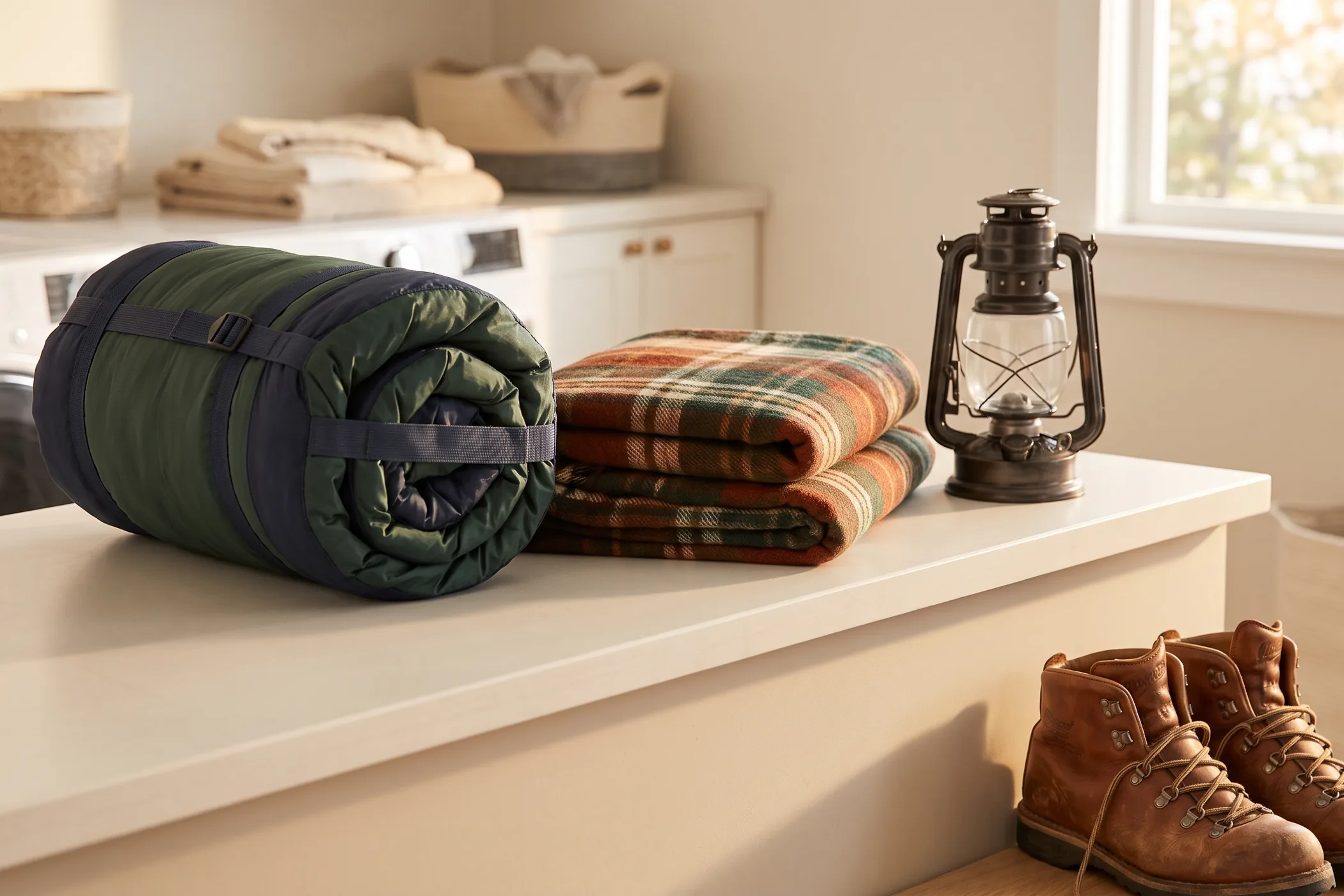
The last camping trip of the season usually ends the same way. The sleeping bag gets stuffed into its sack, tossed in the garage, and forgotten until next spring. That is exactly how a bag ends up flat, musty, and smelling like last summer’s campfire. A little care now keeps it warm and fresh for the next trip.
Why Clean Gear Before You Store It
Everything you slept in leaves something behind. Body oils, sweat, sunscreen, campfire smoke, and a bit of dirt all work into the fabric and the fill. Stored dirty, those soils break down fibers, trap odor, and in damp conditions can lead to mildew. Cleaning before storage is the single best thing you can do for a bag you want to last.
Read the Care Tag First
Sleeping bags are not all built the same, and the tag tells you what you have.
- Synthetic fill is generally more forgiving and tolerates washing better.
- Down fill is lighter and warmer for its weight, but it clumps when wet and takes a long time to dry properly.
- Shell fabrics are often thin, coated nylon or polyester that can wear if they are handled roughly.
If the tag says to wash it, follow it. If the tag is missing or unreadable, treat the bag as delicate.
Why Home Machines Often Cause Trouble
A sleeping bag is bulky, and most home washers are too small and too rough for it. The agitator in a top-loading machine can tear the internal baffles that hold the fill in place. A bag that is too big for the drum will not rinse evenly, leaving detergent behind that dulls the fill.
Drying is the bigger risk. Wet fill left to dry unevenly clumps and can sour. Down needs to be dried completely, and a bag that feels dry on the outside can still be damp in the middle.
What Builds Up and What to Do
- Sweat and body oils: these are the main cause of that stale smell, and they need a proper wash.
- Campfire smoke: airing the bag out in fresh air helps, but smoke often settles deep in the fill and needs cleaning. Our guide to removing smoke smell from clothes explains why.
- Sunscreen and sap: spot treat these before they set.
- Spills and dirt: brush off what you can and spot clean gently.
Dry It Fully, Store It Loose
Whatever you do, the bag has to be completely dry before it goes away. Then store it the right way. A bag kept compressed in its stuff sack for months loses loft, because the fill stays crushed. Use a large breathable storage sack, or hang it loosely in a closet. Keep it away from damp garages and basements.
What a Home Wash Cannot Fix
Be honest about limits. An older bag with a worn shell, torn seams, or fill that has permanently collapsed will not become new again, and no cleaning can promise that. If a waterproof coating on a tent or shell has worn off, washing will not restore it. What cleaning can do is remove the odor, soil, and buildup that make gear feel old.
When to Let Us Handle It
Bulky items like sleeping bags are exactly what a professional can handle more safely than a home washer. Bring it in and we will tell you honestly what the tag allows and what the bag can take. You will get it back clean and ready for next season.
Schedule a pickup or sign up for Vogue Valet today and enjoy expertly cared-for clothes without the hassle.