The gown your baby wore for their baptism may already be older than you are, and with a little care it can be worn by their children too. Here in Sacramento, families pass these pieces down like small treasures, and how you clean and store the gown now decides whether it holds up for the next christening. Here is what actually protects it.
Why Christening Gowns Yellow and Weaken Over Time
Most heirloom gowns are made of natural fibers like cotton, linen, and silk, often trimmed with fine lace. Those fibers are beautiful, but they are also reactive. Two things quietly damage a stored gown:
- Invisible stains. Milk, formula, drool, and body oils may not show on the day, but the sugars and proteins in them oxidize over months and turn brown or yellow. This is why a gown that looked clean when you put it away can come out spotted years later.
- Bad storage materials. Ordinary cardboard boxes, tissue paper, and cedar chests release acids and lignin that scorch fabric over time. Plastic bags trap humidity and can yellow fibers or grow mildew.
The takeaway is simple. A gown does not need to be dirty to deteriorate. It needs to be cleaned properly and stored in materials that will not fight the fabric.
Cleaning Delicate and Vintage Lace Safely
Before you touch water or any product, check the gown for weak spots. Vintage lace, silk, and aged cotton can be far more fragile than they look, and some antique gowns are genuinely too delicate for home cleaning at all.
If the gown is newer and sturdy, here is a gentle approach for a light refresh:
- Test any product on a hidden seam first and wait to see if the color or fiber reacts.
- Use a clean white cloth so no dye transfers onto the gown.
- Work with cool or lukewarm water, never hot, since heat sets protein stains like milk and formula.
- Blot gently at a spot, never scrub, because rubbing can break delicate fibers and distort lace.
- Support the whole gown when it is wet. Wet fabric is heavy and pulls at its own seams.
Please do not put an heirloom gown in a washing machine, and do not reach for chlorine bleach. Both can shred lace and permanently weaken old fibers. If the gown is visibly aged, torn, or you simply do not know what it is made of, stop here and let a professional handle it.
Whitening Without Damaging the Fibers
The instinct with a yellowed gown is to bleach it white again. That instinct is what destroys the most heirlooms. Chlorine bleach reacts with protein-based fibers like silk and wool and can actually turn them more yellow, and over time it eats away at cotton and linen too.
Safer whitening depends on gentle, controlled methods rather than harsh chemicals. That can mean a very mild oxygen-based approach on fabrics that tolerate it, careful sunlight in some cases, and patience. Even then, results vary. Deeply oxidized stains that have been setting for decades may lighten but not vanish, and anyone who promises a perfectly white result on an old gown is overpromising. Honest expectations protect the gown.
Acid-Free Preservation Boxing
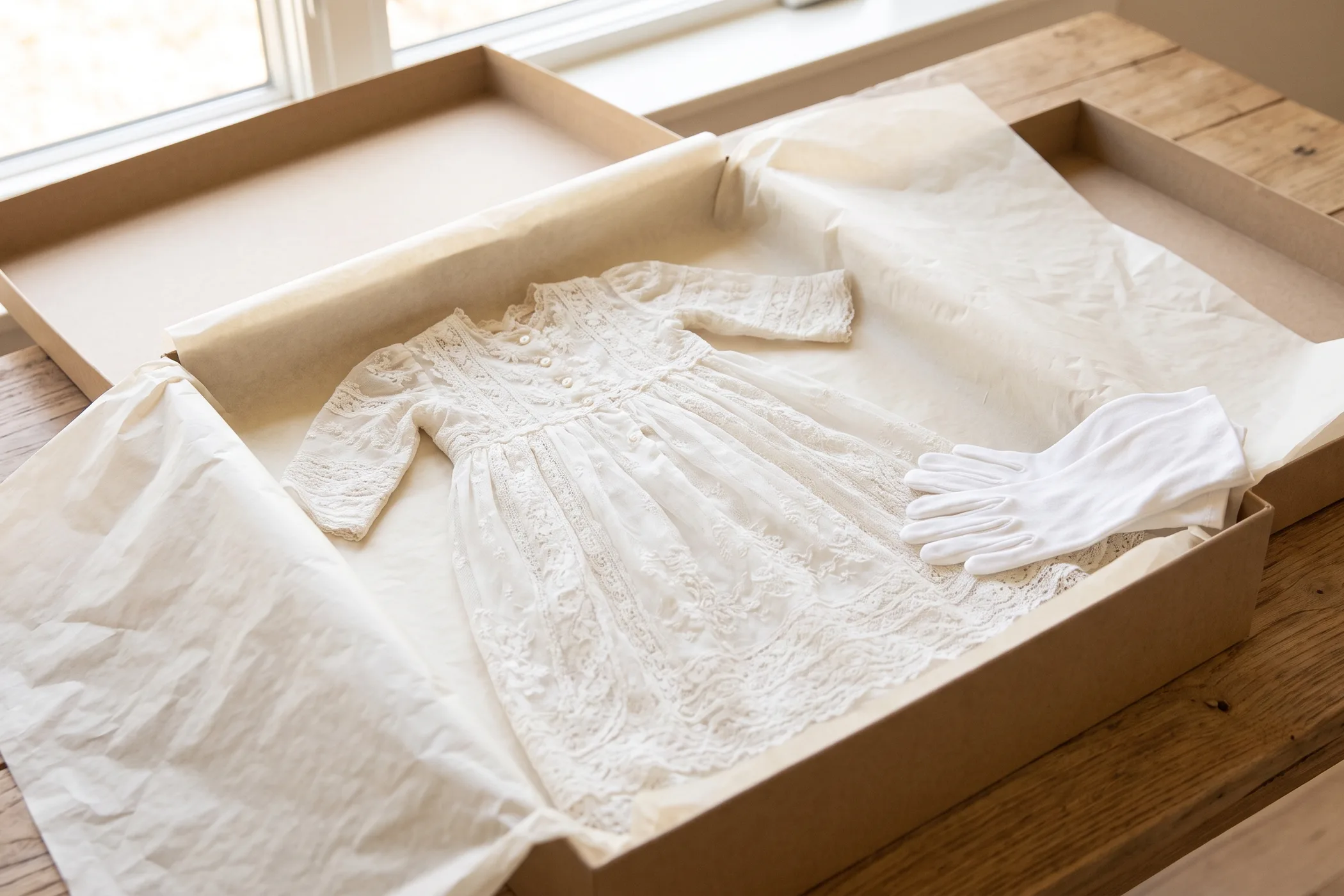
Once a gown is truly clean, how you store it matters as much as the cleaning. The goal is a stable, acid-free environment that keeps light, moisture, and pollutants away.
- Use an acid-free, lignin-free preservation box, not a standard cardboard box.
- Layer the gown with acid-free tissue, and pad the folds so creases do not become permanent stress lines.
- Avoid plastic bags and airtight plastic bins, which trap moisture against the fabric.
- Keep the box out of the attic and the basement. You want a cool, dark, dry, temperature-stable spot like an interior closet shelf.
- Do not add cedar blocks, sachets, or scented paper directly against the fabric.
Multi-Generation Storage Tips
A preserved gown is not quite a set-it-and-forget-it item. A few small habits keep it safe across the years:
- Refold the gown along different lines every couple of years so the same crease is not always under tension.
- Handle it with clean, dry hands, or cotton gloves if you have them, since skin oils transfer to fabric.
- Keep it away from direct sunlight and fluorescent light, both of which fade and weaken fibers.
- Check on it occasionally for any sign of moisture, pests, or new discoloration, especially after a move.
For more on keeping treasured pieces safe, read our guide to garment preservation.
When to Let Us Handle It
An heirloom christening gown is not the place to experiment. The stains that matter most are the ones you cannot see yet, and the fibers are often older and weaker than they appear. At Vogue Cleaners we clean and preserve delicate gowns with methods matched to the fabric, gentle treatment for set-in protein stains, and acid-free preservation packaging built to last. We will always tell you honestly what we can and cannot safely do for a particular gown, because protecting it matters more than promising a perfect result.
Your family’s gown deserves to make it to the next christening.
Schedule a pickup or sign up for Vogue Valet today and enjoy expertly cared-for clothes without the hassle.