The first cold morning always seems to catch us off guard. You reach for your winter coat and find last season’s stain still on the sleeve, or a button hanging by a thread. A little prep now saves that scramble later. Here is the checklist we recommend for getting your wardrobe ready before winter really sets in.
When to Actually Do This
Sacramento makes this easy to put off. We get warm afternoons well into October, so the seasonal swap never feels urgent until the morning it does. Late September into early October is the sweet spot. Everything still fits in your schedule, repairs have time to come back, and you are not competing with the rush that hits every cleaner and tailor in town the first genuinely cold week.
Clean Everything Before You Store It
This is the golden rule of seasonal swaps. Always clean summer clothes before packing them away. Invisible traces of sweat, body oil, and food are exactly what moths and stains feed on over months in storage. Clean fabric goes in, clean fabric comes out.
It is worth being strict about this even for pieces that look perfectly clean. A linen shirt worn once on a warm evening still carries body oil in the collar, and eight months in a box is plenty of time for that to oxidize into a yellow mark or attract something with an appetite.
Store Summer Clothes the Right Way
- Use breathable cotton garment bags or bins, not sealed plastic that traps moisture
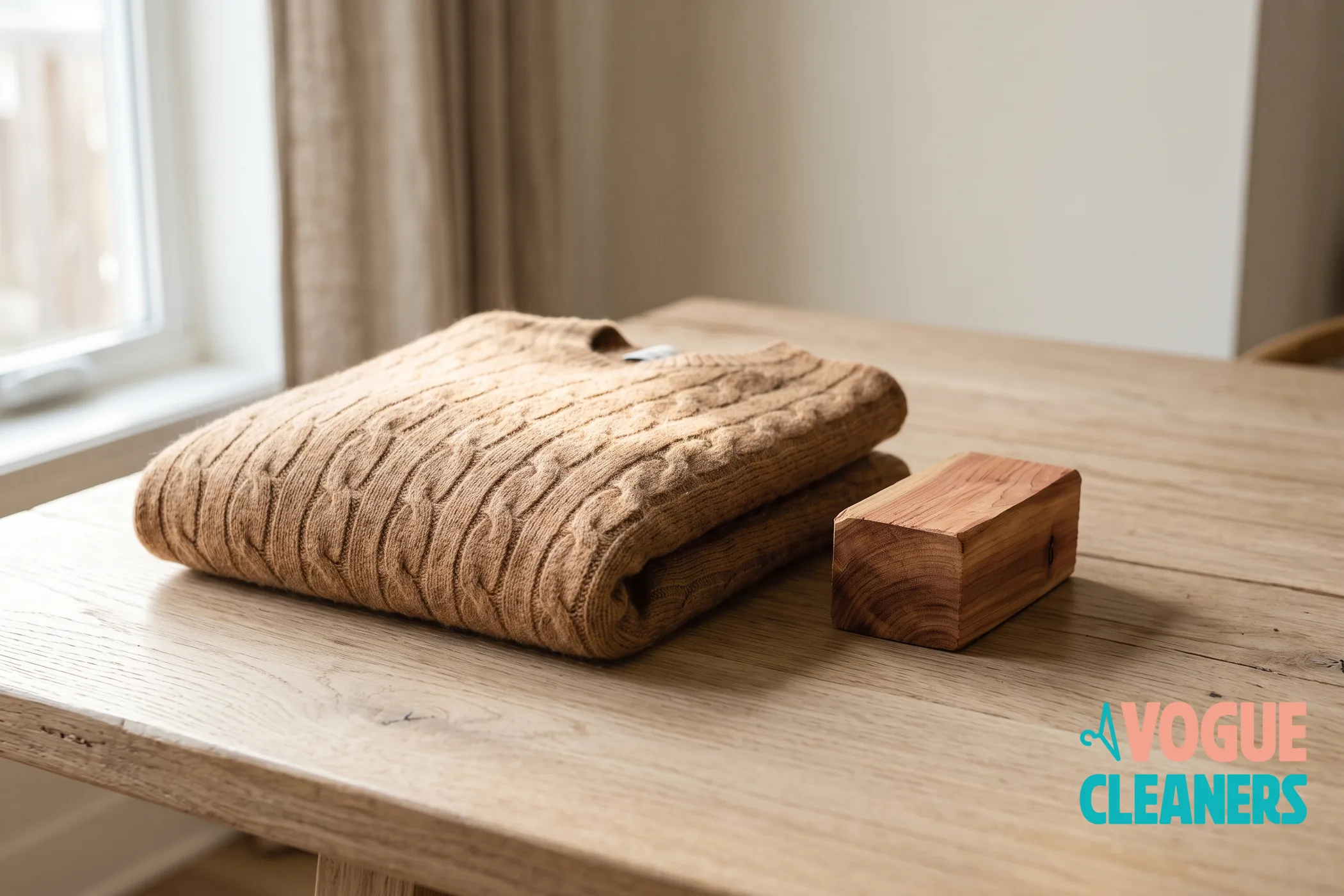
- Add cedar blocks instead of mothballs for a natural moth deterrent
- Store in a cool, dry, dark place, not a damp garage or a hot attic
- Fold knits, hang structured pieces
- Do not pack containers so tightly that nothing can breathe, since airflow is what prevents mustiness
Pull Out and Inspect Your Winter Pieces
Bring your cold weather clothes into the light and check them over:
- Look for moth holes, loose buttons, and stuck zippers
- Check coats and jackets for last season’s stains, especially the cuffs and the inside of the collar
- Check linings, which tend to tear at the armhole long before the outer fabric shows any wear
- Set aside anything that needs cleaning or repair before the first wear
Doing this in daylight near a window catches far more than a quick look in a dim closet will.
Give Coats and Outerwear Some Love
Winter coats work hard, and they last longer with a fresh start. A professional clean at the start of the season removes built up grime, helps restore water resistance on some fabrics, and gets wool and down looking full again. Do the same at the end of the season before you store them.
Down jackets in particular benefit from proper cleaning rather than another year of use, because body oil gradually works into the down and flattens its loft. A coat that has gone thin and cold is often not worn out, it is just dirty.
Between wears, a soft garment brush on wool does more than most people realize. It lifts surface dust and salt and keeps you from needing a full clean as often, which is gentler on the coat over its life.
Do Not Forget Your Winter Footwear
Footwear is the step almost everyone skips, and it is the one that costs the most to get wrong.
- Clean off last season’s salt and grime before it sits another year, since salt residue dries out and cracks leather
- Condition leather boots so they do not stiffen and split over a dry stored summer
- Reapply a water repellent treatment on suede and leather before the first rain, not after
- Check the soles and heels now, because a resole booked in October comes back before you need it
- Store boots upright with shapers or rolled paper inside so the ankles do not crease and collapse
Handle Repairs Now, Not in December
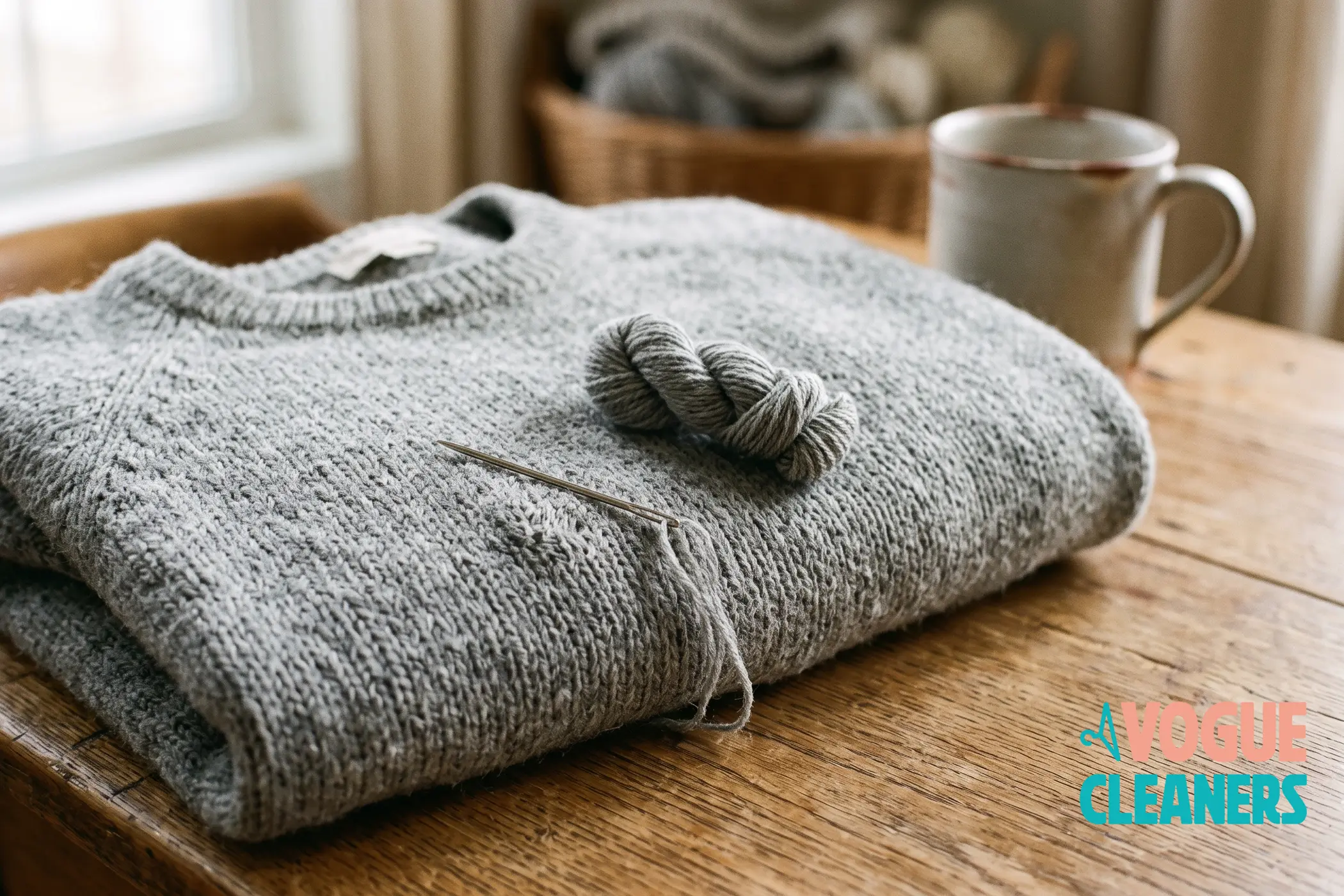
A loose button or a small hem is a five minute fix in October and a real frustration when you are rushing out the door in the cold. Knock these out early so everything is ready to wear when you actually need it.
Make one pile for repairs and deal with it as a single errand rather than rediscovering each problem the morning you wanted to wear the thing.
Organize So You Can Actually Find Things
Once everything is clean and repaired, how you put it back matters. Keep what you wear weekly at eye level and in easy reach, and move the occasional pieces higher or further back. Group by type, so all the coats hang together and all the knits stack together, which makes getting dressed on a cold morning a much shorter exercise.
This is also the natural moment to be honest about what you did not wear at all last winter. If a coat went untouched through an entire season, it is probably not going to earn its hanger this year either.
Let Us Get You Ready for the Season
At Vogue Cleaners we handle the seasonal reset for a lot of Sacramento families, cleaning summer pieces for storage and refreshing winter coats and knits so they are ready to go. Hand us the pile and cross it off your list.
Get your winter wardrobe ready the easy way. Schedule a pickup or sign up for Vogue Valet today and enjoy expertly cared-for clothes without the hassle.