There was a time when nobody threw out a sweater over a small hole. They fixed it. Somewhere along the way we lost that habit, and a favorite knit with one moth hole ends up in the trash. At Vogue Cleaners we would love to bring back the idea of mending over replacing, because a good sweater is worth saving. Here is a look at the lost art of sweater repair and how it works.
Why a Good Sweater Is Worth Repairing
The math usually favors mending, and by more than people assume. A quality wool or cashmere sweater is a real purchase, and a repair is a small fraction of replacing it. That gap gets wider the better the knit is.
There is also the part that does not show up in the math. Knitwear breaks in. The sweater you reach for every October is the one that has softened to your shape over years, and a new one off the rack is not the same garment no matter what the label says. Plenty of the pieces that come across our counter are not even purchasable anymore, because the line was discontinued or it was knitted by someone in the family.
And there is the simple fact that textiles are one of the heavier things we throw away. Getting another five years out of a sweater you already own is the easiest environmental decision in your closet.
Why Sweaters Get Holes in the First Place
Most sweater damage comes down to a few culprits:
- Moths, which are drawn to wool, cashmere, and the traces of skin oil and food left in fibers
- Snags that pull a thread and leave a run or a small hole
- Simple wear at the elbows, cuffs, and seams over time
Knowing the cause matters, because a moth hole and a snag are fixed in different ways. Moth damage tends to be several small irregular holes in one area, usually discovered after storage. Wear damage is a gradual thinning at a predictable spot. A snag is a single pulled loop that widens later.
Darning: The Classic Fix
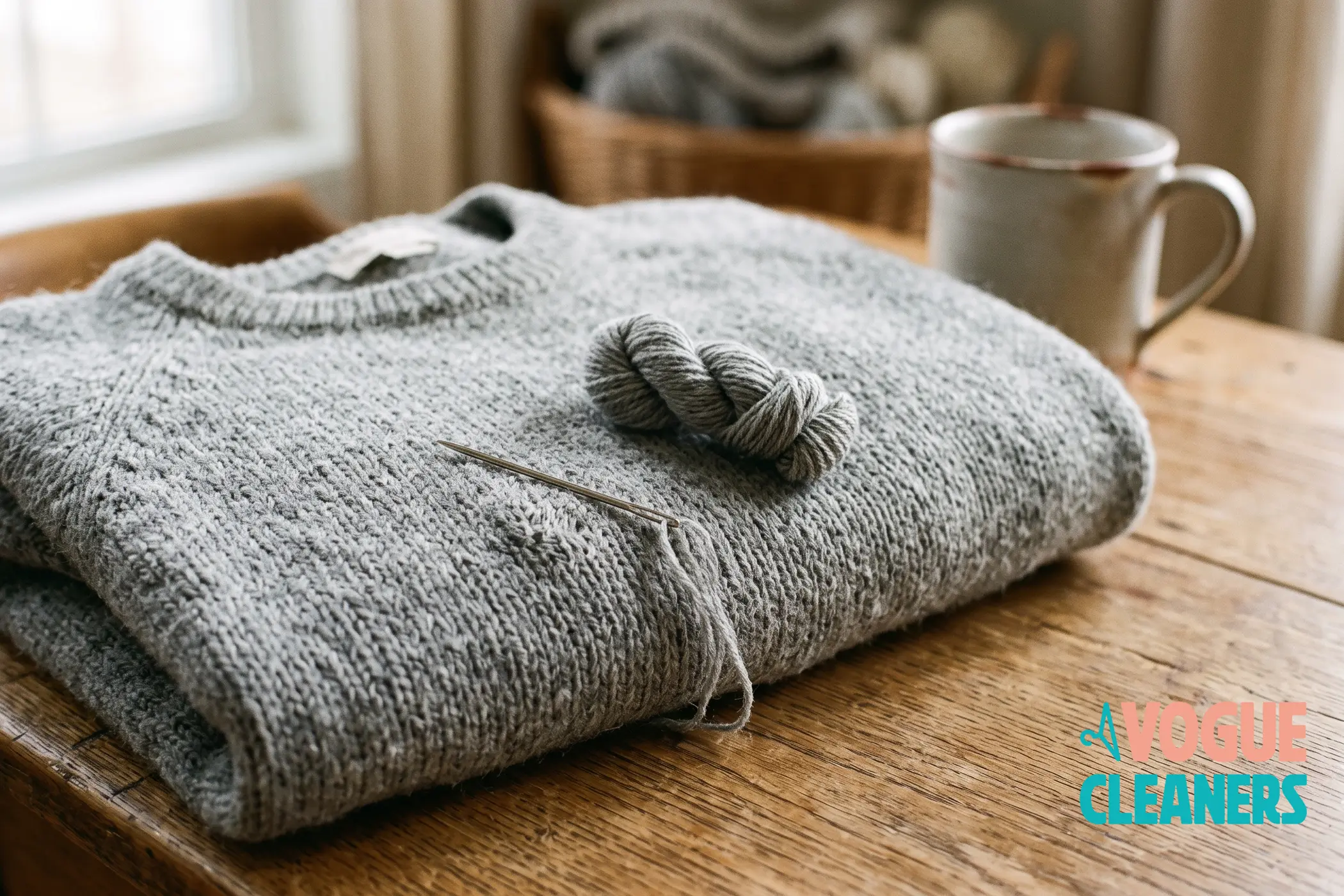
Darning is the traditional way to close a hole, weaving new thread across the gap to rebuild the fabric. Done well with matching yarn, a darn is strong and nearly invisible. It works beautifully on wool and thicker knits, and it is a genuine craft that takes patience and a good eye.
A well darned repair is also durable. Because it rebuilds the structure rather than just closing the gap, it holds up to wear and washing instead of pulling open again in a month.
Reweaving Moth Holes
Reweaving is the finer, more painstaking cousin of darning. Using threads that often come from a hidden seam or hem of the same garment, an expert rebuilds the weave hole by hole so the repair blends into the original fabric. For fine knits and cashmere, this is what makes a hole disappear rather than just close.
Because the thread comes from the garment itself, the color and the fiber match exactly, which is the part no replacement yarn can quite achieve. It is slow work, and on the right piece it is worth every minute.
Patching and Elbow Patches
Sometimes the damage is too broad to rebuild thread by thread, particularly worn through elbows on an old wool cardigan. That is where patching comes in, either an invisible patch worked from behind or a deliberate leather or suede elbow patch on the surface.
The visible version is not a compromise. Elbow patches have been a feature of good knitwear for a century, and they turn a worn spot into part of the design while adding real reinforcement where the sweater takes the most stress.
Fixing Snags and Pulls
A snag does not need to be cut. The thread can usually be gently worked back through to the inside with a small tool, smoothing the surface again. Cutting a snag is what turns it into a hole, so resist the scissors.
If you catch a snag while wearing something, leave it alone until you can deal with it properly rather than tugging at it. Pulling one end tightens the loop and distorts the stitches around it.
Cashmere and Fine Knits
Cashmere needs a lighter hand than wool at every stage. The fibers are shorter and finer, which is what makes it soft and also what makes it pill and tear more easily. A repair that would sit invisibly in a chunky wool knit can pucker a fine cashmere gauge and end up more noticeable than the original hole.
This is the category where home repair goes wrong most often. A cashmere sweater with a hole is worth having someone look at before anyone puts a needle in it.
What You Can Do at Home and What to Leave to a Pro
A small snag or a loose button you can handle at home with a little patience. But moth holes, thin worn spots, and anything in cashmere or a fine knit are worth expert hands. The wrong home repair can pucker the fabric or make the damage more obvious than it was, and that is harder to undo than the original hole.
Preventing the Next One
Repair is better than replacing, and not needing the repair is better still. Clean knits before you store them for the season, since moths are drawn to the oils and food traces left in worn fibers rather than to clean wool. Fold sweaters instead of hanging them so the shoulders do not stretch. Keep storage cool and dry, and give the closet itself a vacuum now and then, because moths favor quiet corners.
Let Us Save Your Favorites
At Vogue Cleaners we care for the clothes you are not ready to give up on. Before you retire a sweater over one small hole, bring it in. Often the fix is easier than you think, and the sweater has years left in it. We will also tell you honestly when a knit is too far gone to repair well, rather than taking on a job that will show.
Give a favorite knit a second life. Schedule a pickup or sign up for Vogue Valet today and enjoy expertly cared-for clothes without the hassle.