You pull your favorite wool sweater out of the closet, hold it up to the light, and feel your stomach drop. A tiny hole.
The next thought is almost always the same. Was it moths, or did the cleaner damage it? This comes up often with wool and cashmere, and the good news is that most mystery holes follow predictable patterns. Once you know what to look for, it becomes much easier to work out the likely cause and to stop it from happening again.
The Short Answer
Most small holes that appear after storage are caused by moth larvae, especially if the sweater was put away carrying body oils, deodorant, food residue, or sweat in the fibers. True cleaning problems usually show up as shrinkage, felting, distortion, or a change in texture, not isolated pinholes.
Why Wool and Cashmere Get Holes at All
Wool and cashmere are protein based natural fibers. That is why they are warm, breathable, and soft, and it is also why they are more vulnerable to certain kinds of damage. In practice, holes come from one of three causes: moth larvae feeding, friction and abrasion that slowly thins the fabric until it breaks, and snags where a pulled thread later becomes a hole.
The mistake most people make is assuming a hole automatically means moths, or automatically means the cleaner. The answer depends on timing and pattern.
What Moth Damage Usually Looks Like
When someone says moths ate a sweater, the damage is almost always from larvae rather than the adult moth. It tends to look like:
- Small, irregular holes rather than a clean slice
- More than one hole in the same general area
- Damage you discover after the piece has been in storage
You will often see it where residue collects even when the garment looks clean, particularly underarms and collars. Moths are not especially interested in clean wool. They are drawn to the body oils, sweat, deodorant buildup, and food residue we leave behind, which is why dirty storage is the single biggest risk factor.
What Looks Like Moth Damage but Is Not
Snags. A snag can come from a ring, zipper, belt, or bag strap. At first it looks like a pulled loop. After a few wears that pull widens into a hole, sometimes weeks after the original snag happened.
Abrasion. This happens where fabric rubs repeatedly, at underarms, elbows, shoulders under a bag strap, or where a seatbelt crosses the chest. With abrasion you usually see thinning, fuzzing, or heavy pilling before the fabric finally gives way.
What Cleaning Damage Actually Looks Like
If cleaning is genuinely the issue, it does not usually show up as one or two random pinholes. It looks like:
- Shrinkage or felting, where wool becomes tighter and matted
- Shape distortion, such as waviness or stretched seams
- Texture change, meaning stiffness or a loss of softness
- Dye problems, including bleeding or uneven shading
- Trim and seam issues, where glue backed details loosen
So if a sweater came back noticeably smaller, harsher, or misshapen, that is a different situation from finding holes after months in a drawer.
How to Actually Prevent Holes
You do not need a complicated routine, just a consistent clean and store habit.
- Clean before seasonal storage. This is the single biggest prevention step. Even a sweater worn once holds invisible residue, and cleaning removes exactly what larvae are drawn to.
- Store knits folded, not hanging. Hanging stretches sweaters and creates weak points.
- Keep storage cool and dry. Sealed bins work well if the items are clean and completely dry. Humidity and long undisturbed storage raise the risk.
- Keep the closet itself clean. Vacuum floors, shelves, and baseboards. Moths like quiet corners. If you have had problems before, check wool rugs and stored blankets nearby too.
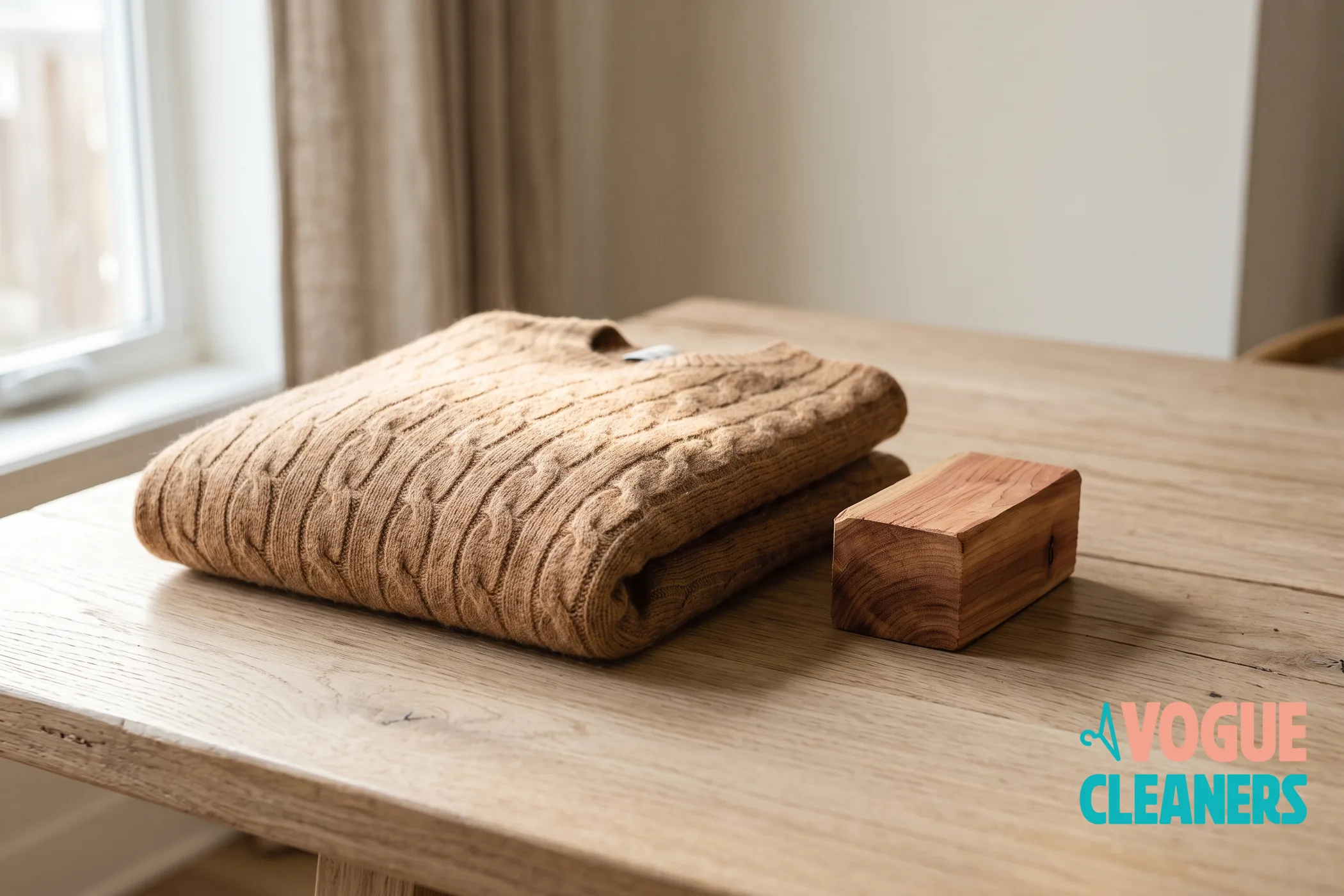
Cedar and lavender can help deter moths, but neither is a guarantee on its own. Cleaning before storage does far more.
If You Already Found Holes
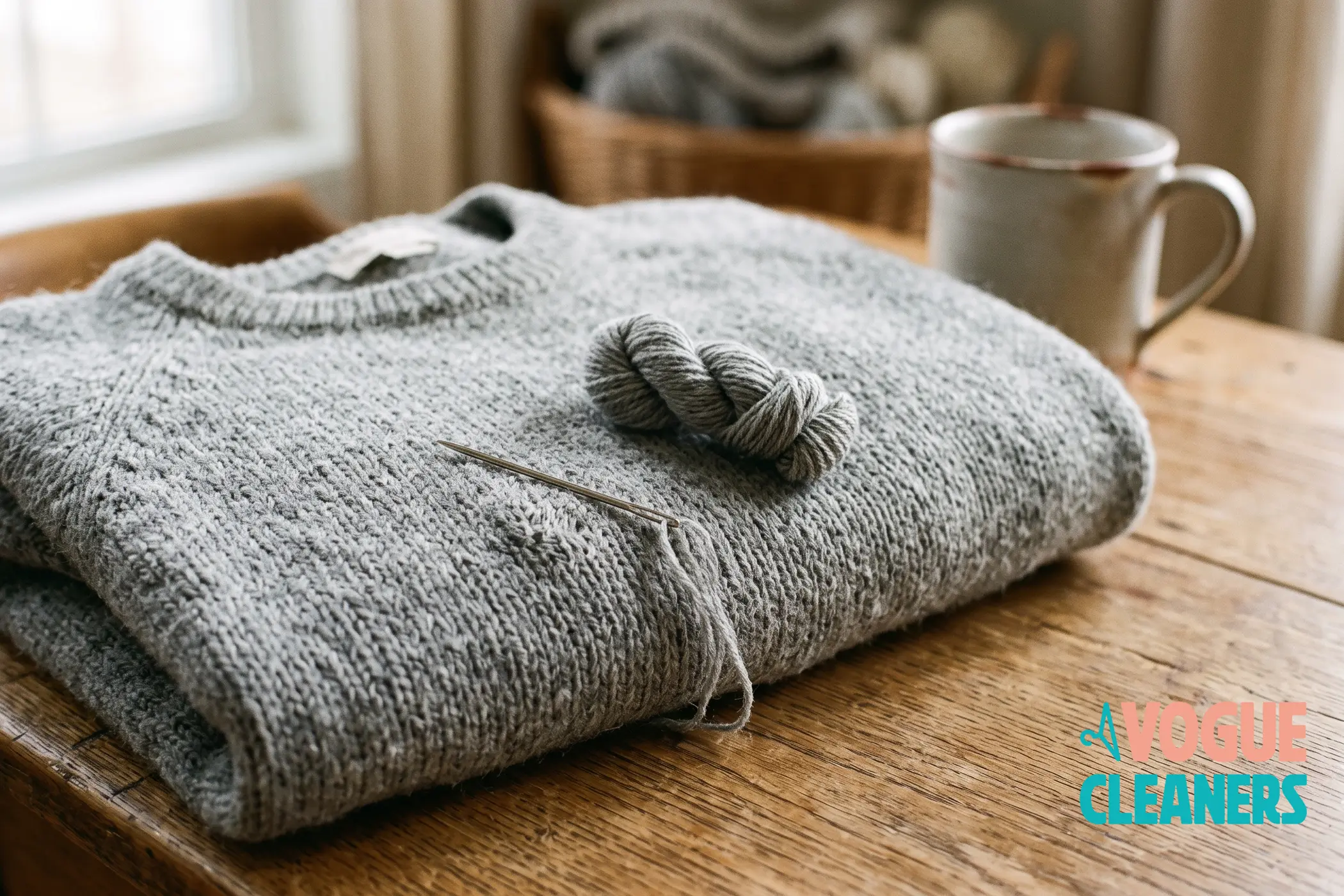
Do not put the sweater straight back in the closet with everything else. Isolate the garment, clean it along with nearby wool and cashmere items, vacuum and wipe down the storage area, then look at repair options like reweaving or darning depending on the knit.
When to Let Us Handle It
If you are not sure what caused the damage, or you want to protect your wool and cashmere before it goes into storage for the season, bring it to us. At Vogue Cleaners we can usually tell you what you are looking at, clean the piece properly before it is put away, and talk through whether a repair is realistic.
Get your knits stored the right way this year. Schedule a pickup or sign up for Vogue Valet today and enjoy expertly cared-for clothes without the hassle.