Nothing beats linen when the Sacramento heat sets in. It breathes, it keeps you cool, and it has that easy, put together look that never tries too hard. The catch is that linen is honest. It shows every crease, and it will shrink or lose its shape if you treat it like the rest of your laundry. The good news is that caring for linen is simple once you know a few rules. Here is how we keep it crisp and cool all season long.
Why Linen Wrinkles So Easily
Linen is made from natural flax fibers, and those fibers are strong but not very stretchy. When they bend, they tend to hold the fold. That is why linen creases the moment you sit down. It is not a flaw, it is just the nature of the fabric, and a little bit of that relaxed wrinkle is part of linen’s charm. The goal is not zero wrinkles, it is keeping the fabric crisp and clean without deep set creases.
It also helps to know that linen softens with age. A new linen shirt feels crisper and creases more sharply than one you have worn for three summers. That is the fiber relaxing, and it is a good thing.
Read the Label Before You Do Anything
Not all linen is the same, and the care label is the fastest way to know what you are working with.
- Pure linen in a simple cut, like a shirt, a sundress, or trousers, is usually washable at home
- Linen blends behave like whatever they are mixed with, so a linen and rayon blend is far more likely to shrink or lose shape than pure linen
- Structured linen, meaning blazers, tailored dresses, and anything with interfacing, lining, or shoulder construction, is usually labeled dry clean for good reason
- Anything with a dark or saturated dye is worth washing separately the first few times, since linen dyes can bleed early on
When a label says dry clean only on a structured piece, treat that as real. The fabric might survive a wash, but the construction underneath it often will not.
How to Wash Linen the Right Way
Linen loves a gentle approach. When you wash at home:
- Use cool or lukewarm water, never hot
- Choose the gentle cycle
- Use a mild detergent and only a small amount
- Skip the fabric softener, it coats the fibers and dulls the crispness
- Give the piece room, a crowded machine sets more wrinkles
- Wash linen with other linen or similar lightweight items, not with towels or heavy denim that will beat it up
Turning a garment inside out before washing protects the surface and helps colors last, which matters on linen because the weave sits so open.
How to Keep Linen From Wrinkling
The biggest trick is timing. Pull linen out of the wash right away and do not let it sit in a damp pile. A few habits go a long way:
- Give each piece a firm shake and smooth it with your hands
- Hang or lay it flat while it is still slightly damp
- Steam it rather than pressing hard with a dry iron
- If you iron, do it while the fabric is a little damp on a medium setting
- Iron on the reverse side for darker linen, which prevents the shine that heat can leave on the surface
How to Prevent Linen Shrinkage
Shrinkage happens with heat and agitation, so keep both low. Air drying is your friend. Lay linen flat or hang it in the shade instead of running it through a hot dryer. If you must use the dryer, use low heat and pull the piece out while it is still a touch damp. That first wash matters most, so treat new linen gently from the start.
Drying in the shade rather than direct sun matters more than people expect. Sacramento sun is strong enough to fade colored linen over a season of line drying, and it can slowly weaken the fibers on a piece you hang out week after week.
Keeping Linen From Yellowing
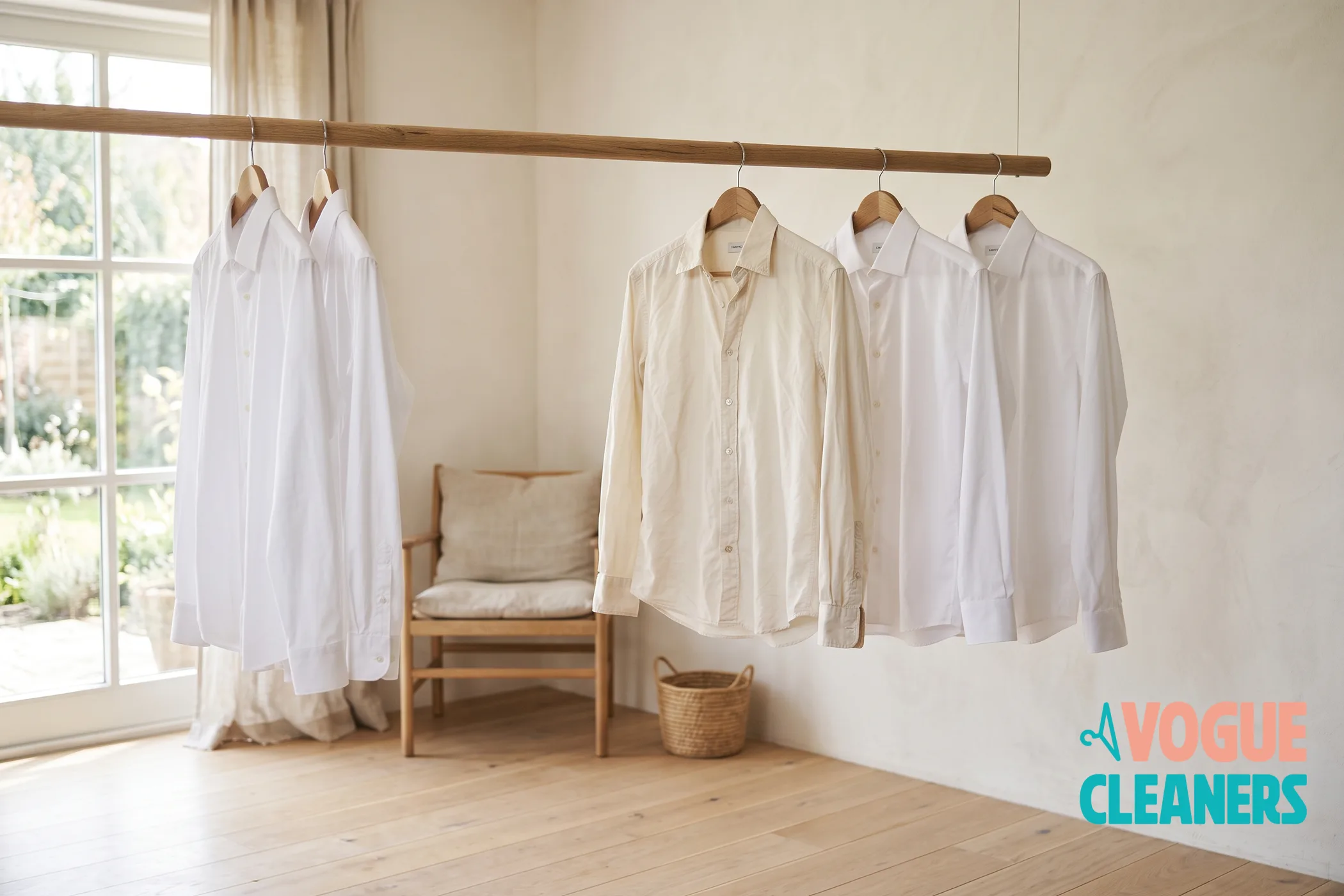
White and natural linen can go dull or slightly yellow over time, usually for two reasons. The first is body oil and sweat that never fully washed out, which oxidizes and darkens over months. The second is storage, particularly plastic bags and cardboard boxes that trap moisture or leach into the fabric.
The fix is mostly prevention. Wash linen before you put it away for the season rather than after you pull it back out, and give it a full rinse so no detergent residue is left sitting in the weave.
Storing Linen Between Wears and Seasons
Linen stores well as long as it can breathe.
- Hang shirts, dresses, and trousers on wide hangers so the shoulders keep their shape
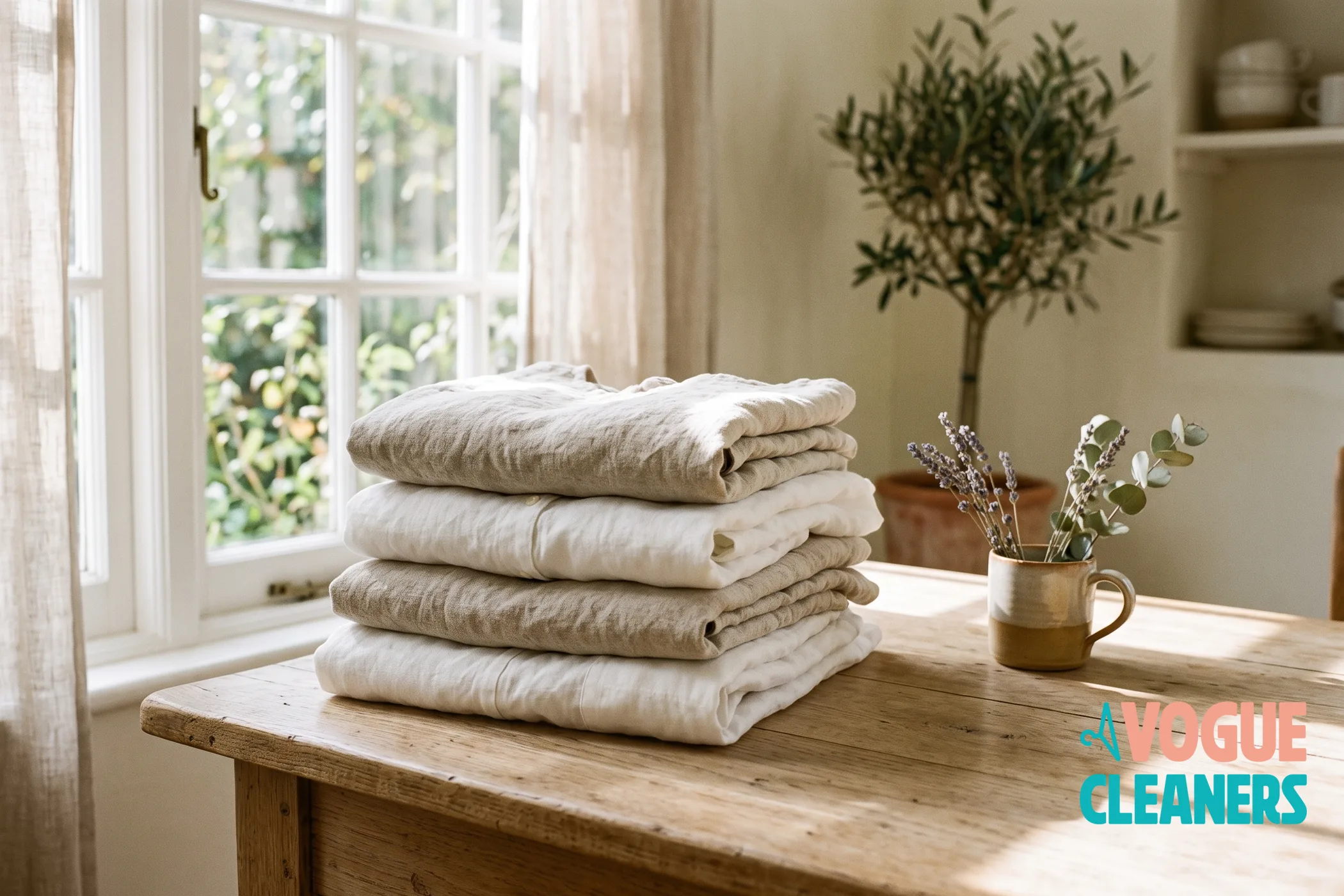
- Fold heavier linen pieces loosely rather than packing them tight, since hard folds become set creases over months
- Use a breathable cotton garment bag, never plastic, which traps moisture and encourages yellowing and mustiness
- Keep it somewhere cool, dry, and dark, away from a hot attic or a damp garage
- Give a stored piece a shake and an airing before its first wear of the season
When to Leave It to Us
Structured linen, like blazers, tailored dresses, and linen blends, holds its shape best with professional care. The heat and moisture control we use presses linen crisp without the shrink risk, and it saves you the fight with the iron. At Vogue Cleaners we handle linen every summer, and we treat each piece so it comes back cool, clean, and ready to wear. We will also tell you honestly when a set in crease or an old yellow mark is not going to fully lift, rather than promising a piece will come back new.
Ready to keep your summer wardrobe sharp? Schedule a pickup or sign up for Vogue Valet today and enjoy expertly cared-for clothes without the hassle.