If you have ever pulled a white shirt out of the closet and noticed it is slowly turning gray, or had a light item pick up a tint from nowhere, you already understand the point of sorting.
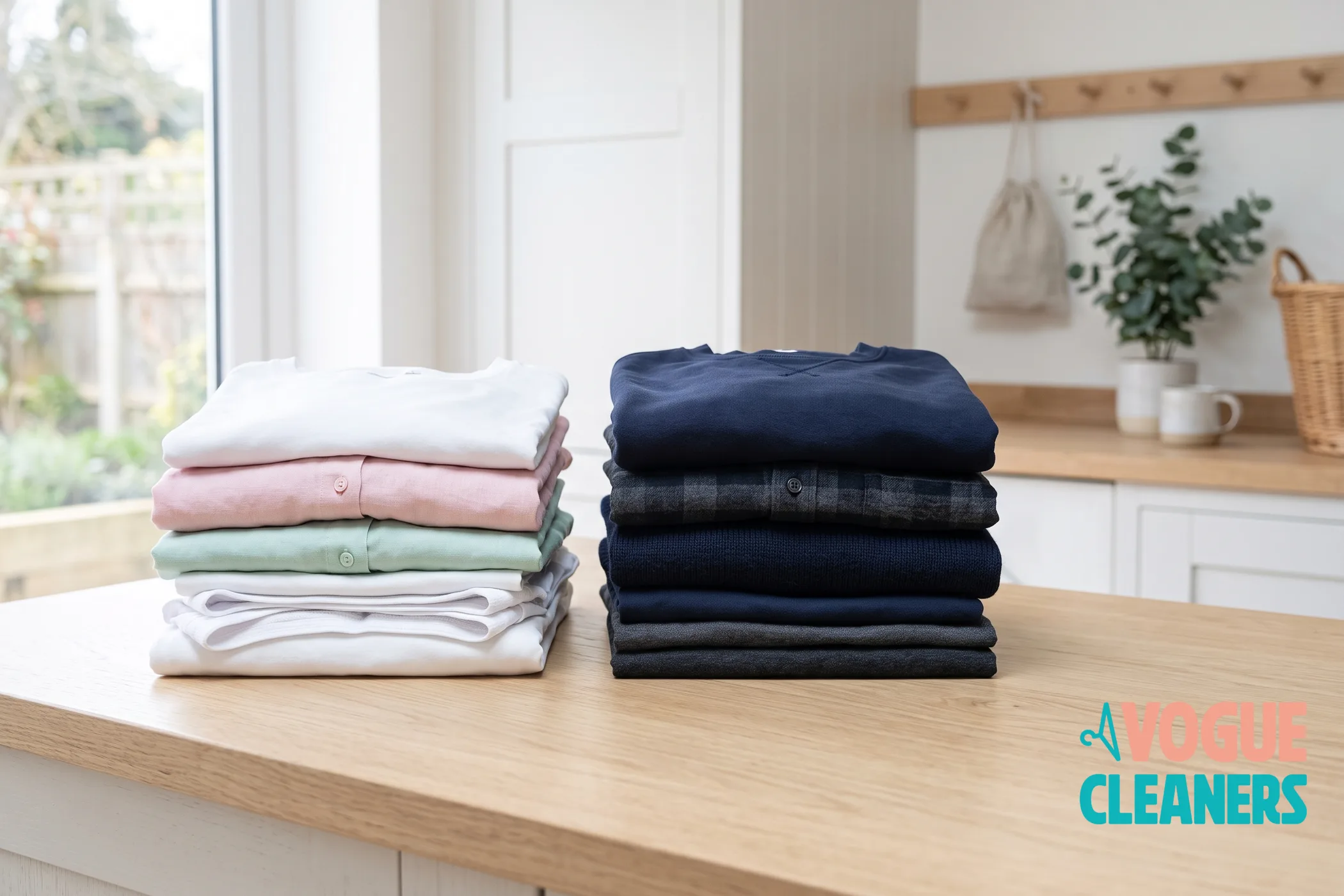
At home we talk about separating lights and darks in the washing machine. Professional cleaners sort too, and it is not just habit. Separating is one of the biggest reasons professional cleaning stays consistent and avoids problems like dye transfer and dullness. Here is what is actually going on, and how to protect your favorite pieces.
The Short Answer
Cleaners sort because it reduces the risk of three things:
- Dye bleeding from darker garments onto lighter ones
- Whites and pastels going dull
- Soil and loose dye redepositing onto light fabrics
How Color Transfer Happens
Color transfer usually comes down to a few factors working together, and it often happens when nobody did anything obviously wrong.
Some dyes are simply less stable than others. Deep reds, navies, saturated blacks, and many new garments release loose dye, especially early in their life. Heat and movement speed that up, since warmth and agitation both increase dye release and help color migrate. And soil carries dye, because body oils and residue act as a carrier that helps a tint move from one item to another.
Put those three together and a load that looked fine going in can come out slightly off.
Why Sorting Matters in Professional Cleaning
Professional sorting goes well beyond light and dark. Garments also get separated by:
- Fabric type, since wool, silk, and synthetics behave differently
- Soil level, keeping heavily soiled pieces away from lightly worn ones
- Risk, pulling aside new dark denim, bright reds, and anything with an unstable dye
That sorting is what keeps lighter pieces from coming back gray, cloudy, or unevenly tinted.
What to Do if Your Whites Are Already Dull
When whites lose brightness over time, it is usually a combination of buildup and tinting rather than one dramatic event. A reset usually means stopping mixed color washing, cutting back on detergent, since residue attracts soil, and drying properly, since overheating yellows some fabrics. For delicate whites, professional cleaning can lift buildup more evenly than repeated home washing. Very set in graying may not come all the way back, and we would rather tell you that up front than promise otherwise.
How to Reduce Color Transfer at Home
A few habits make a real difference:
- Wash new dark items separately the first few times
- Do not overload the washer, since crowded loads rinse poorly
- Turn dark garments inside out
- Avoid long mixed color soak cycles
When to Let Us Handle It
Light suits, delicate whites, and favorite pastels are exactly the pieces worth protecting before a problem starts. At Vogue Cleaners we sort by fabric, soil, and dye risk before anything is cleaned, and we treat problem pieces individually rather than trusting a load to sort itself out.
Keep your whites white and your colors true. Schedule a pickup or sign up for Vogue Valet today and enjoy expertly cared-for clothes without the hassle.