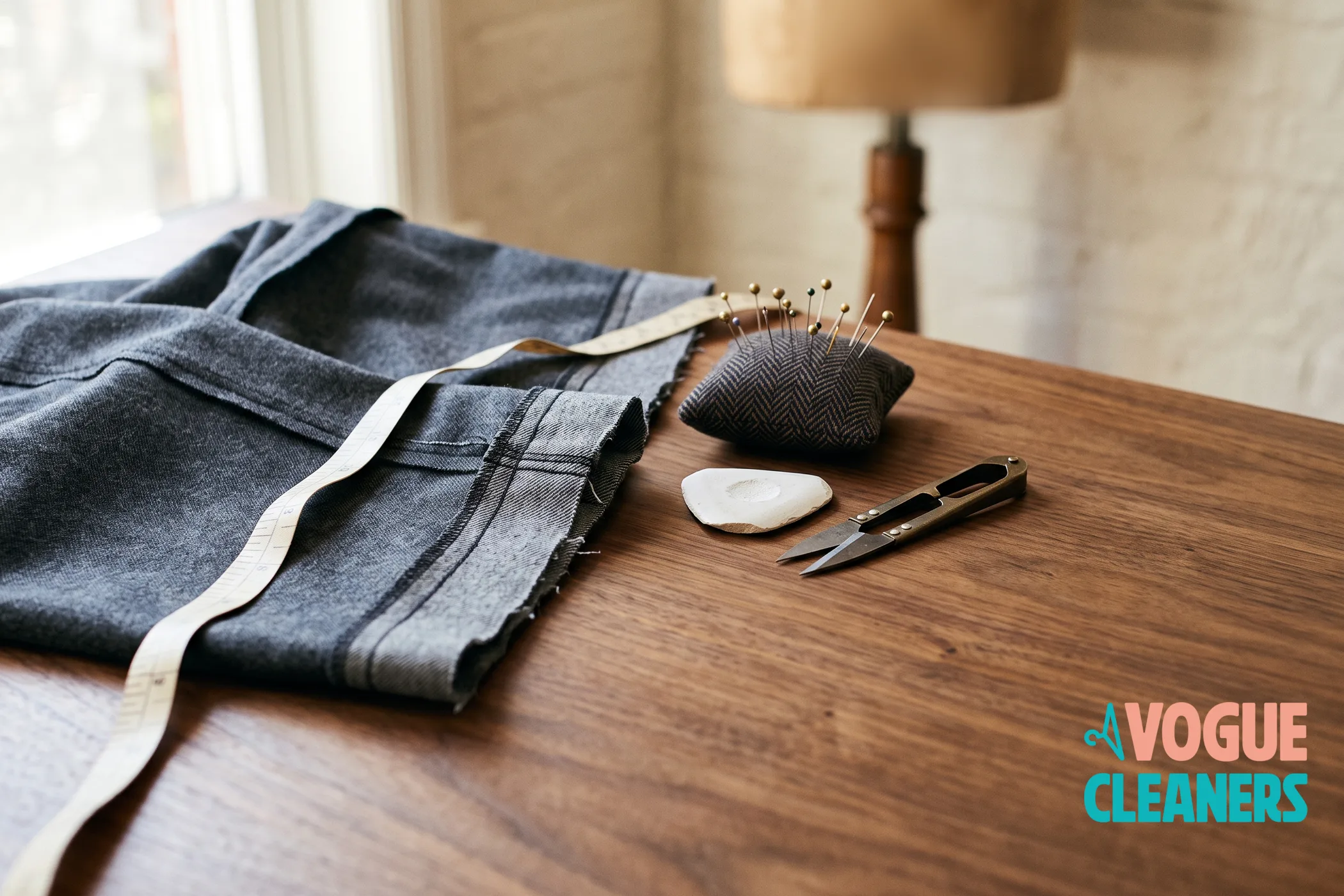
We have written before about the alterations that improve how clothes fit, the hems and sleeves and waistlines that turn an off-the-rack garment into something that looks made for you. This is the other half of that conversation, the one that happens across the counter every week: what can actually be changed, what cannot, and why the answer sometimes has to be no.
Knowing the limits before you buy something, or before you get your hopes up about a garment already in your closet, saves money and disappointment.
Alterations Are Not the Same as Repairs
Both involve a needle, but they solve different problems. An alteration changes how a garment fits: taking it in, letting it out, shortening, lengthening, or reshaping. A repair puts a garment back the way it was: replacing a zipper, resewing a split seam, fixing a torn lining, or closing a hole.
It is worth knowing which one you are asking for, because the two are priced and scheduled differently, and because a garment often needs both. A blazer that wants shorter sleeves and a resewn lining is two jobs, not one.
Why Letting Out Is Harder Than Taking In
This is the single most common misunderstanding, so it is worth explaining properly.
Taking a garment in is a matter of moving a seam inward. There is always room to do that. Letting a garment out depends entirely on what the manufacturer left behind. That extra fabric folded inside the seam is called the seam allowance, and it is the hard ceiling on how much a garment can grow. Well-made clothing often carries a generous allowance, sometimes an inch or more. Inexpensive fast fashion frequently has almost none, because trimming it saves fabric on every unit.
There is a second issue that catches people out. Once an old seam is opened, the original stitch line can leave a visible crease or a faded stripe, particularly on dark fabric or a garment that has been worn and washed for years. The garment fits, but there is a shadow down the side where the old seam used to be.
So when you ask whether something can be let out, the honest answer is that we need to turn it inside out and look. Sometimes there are two useful inches waiting in there. Sometimes there is nothing to work with, and we would rather tell you that up front.
The Repairs Worth Asking About
Repairs are the unglamorous half of the work, and often the higher-value half, because they rescue garments people had already written off:
- Zipper replacement, the most common repair by far, and usually a fraction of the cost of replacing the coat or dress it lives in
- Buttons, including replacing a missing one and resewing a full set so they match and sit evenly
- Linings, which wear out long before the outer fabric on jackets and coats, and can be repaired or fully replaced
- Split seams and small tears, which are quick fixes caught early and much harder once the fabric around them has frayed
- Hook-and-eye closures, snaps, and belt loops, small things that quietly take a garment out of rotation for months
What Honestly Cannot Be Fixed
We would rather set expectations than take in a job that will disappoint you:
- A garment can only be let out as far as the seam allowance permits, and no further. There is no technique that creates fabric that was never there
- Shoulders are the hardest part of a jacket to change, because so much structure is built into them. This is why the old advice to buy for the shoulders and alter everything else is still the right advice
- Knits and stretch fabrics do not hold an alteration the way woven fabric does, and heavily patterned fabric may not match up cleanly once a seam moves
- Fabric that has already thinned, yellowed, or gone brittle with age may not survive being unpicked and restitched, and the new stitching can tear out of it
- A repair on visibly worn fabric will be sound, but it may still be visible, and we will say so before we start rather than after
How to Prepare for a Fitting
A little preparation makes a real difference to the result:
- Bring the shoes you will actually wear with the garment, especially for anything being hemmed. A hem set over sneakers is wrong over heels, and there is no fixing it afterward
- Wear the undergarments you plan to wear with it, since they change the fit more than most people expect
- Bring the garment clean. We work more accurately on something that has already been cleaned and pressed, and a fresh press shows the true line of the fabric
- Bring one outfit at a time rather than an armful, so each piece gets a proper fitting
- Say what the garment is for. The right hem for the office is not the right hem for a dance floor
Timing Around a Wedding or Big Event
If there is a date attached, build in room. Formalwear often needs a second fitting after the first round of adjustments, and both bodies and plans change in the weeks before an event.
Two to three weeks ahead is comfortable for most alterations. A week is workable for simple hems. The day before is a gamble, and for something you will be photographed in all day, it is not a gamble worth taking.
When to Let Us Handle It
If a garment fits everywhere but one place, or has been sitting unworn because of a zipper or a lining, bring it in and let us look at it. At Vogue Cleaners we will tell you honestly what can be changed, what the seam allowance will allow, and what we would leave alone. Alterations are how a good garment earns another few years, and Sacramento closets are full of clothes that need an hour of work rather than a replacement.
A garment that fits properly gets worn. A garment that almost fits does not.
Ready to give your clothes the care they deserve? Schedule a pickup or sign up for Vogue Valet today and enjoy expertly cared-for clothes without the hassle.