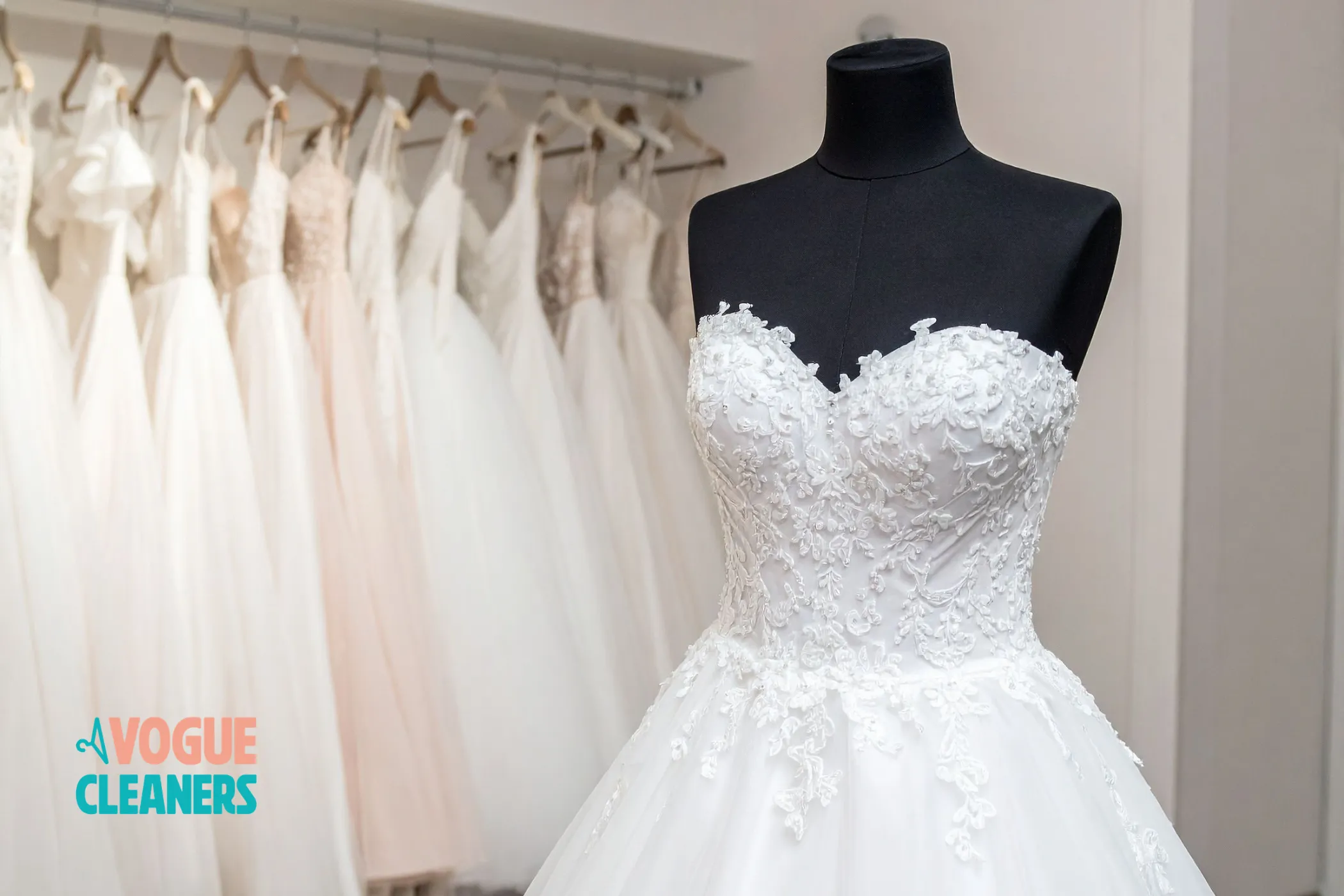
Your wedding day is perfect. The vows, the dancing, the celebration with loved ones. But while you’re creating memories, your wedding dress is collecting evidence of every magical moment.
From the outdoor ceremony to the champagne toast and the late-night dance floor, your gown faces more threats than you might realize. And when the celebration ends, you’re left wondering: can these stains actually come out?
The answer is yes, but only with the right approach. Wedding dress stain removal isn’t like treating your everyday laundry. These delicate fabrics require expertise, specialized techniques, and professional care to restore them without causing damage.
Let’s walk through the five most common wedding dress stains we see at Vogue Cleaners and exactly how we fix them.
1. Grass Stains: The Outdoor Ceremony Souvenir
Why Grass Stains Are So Stubborn
Outdoor weddings are beautiful, but they often leave their mark on wedding gowns. Grass stains on gown hems and trains are one of the most frequent issues we encounter.
Grass stains are particularly tricky because they’re not just dirt. They’re a combination of plant proteins, chlorophyll, and organic matter that bonds with fabric fibers. The green pigment from chlorophyll is especially stubborn, and home remedies often just spread the stain or set it deeper.
Our Professional Approach
When we receive a dress with grass stains, our process includes:
Pre-treatment inspection. We examine the stain under proper lighting to assess how deep it has penetrated the fabric. This helps us determine the right solvent strength and technique.
Enzyme-based solutions. We use specialized enzyme cleaners that break down the plant proteins without harming delicate fabrics like silk, satin, or tulle. These enzymes target the organic compounds in the grass stain specifically.
Gentle agitation. Rather than scrubbing, which can damage fibers or spread the stain, we use controlled, gentle techniques that lift the stain from the fabric.
Multiple treatments if needed. Grass stains sometimes require more than one treatment cycle, especially if they’ve had time to set. We continue the process until the stain is completely removed.
What Not to Do
Never rub grass stains with hot water. Heat sets protein-based stains, making them nearly impossible to remove later. Similarly, avoid bleach on delicate wedding fabrics, as it can cause yellowing or weaken fibers.
2. Red Wine: The Reception’s Biggest Threat
The Wine Spill Panic
A toast gone wrong. A bump on the dance floor. Suddenly, there’s red wine on your white wedding dress. It’s one of the most panic-inducing moments of any reception.
Wine stain removal requires quick thinking and professional expertise. Red wine contains tannins, organic acids, and natural dyes that can permanently bond with fabric if treated incorrectly.
How We Remove Wine Stains
The key to successful wine stain removal is understanding the chemistry involved:
Immediate blotting matters. If you bring your dress to us soon after the wedding, we have a much better chance of complete removal. Fresh stains haven’t had time to oxidize and set into the fibers.
Acidic solutions. We use pH-balanced acidic treatments that neutralize the wine’s tannins. These solutions are carefully formulated to work on delicate bridal fabrics without causing discoloration.
Cold water techniques. Unlike regular laundry, we avoid hot water entirely with wine stains. Cold water prevents the stain from setting while our specialized solvents do the heavy lifting.
Spot treatment testing. Before treating the entire stained area, we test our solution on a hidden part of the dress to ensure it won’t affect the fabric color or texture.
Day-of Emergency Tip
If wine spills on your dress during the reception, gently blot (don’t rub) with a clean white cloth or napkin. Avoid using colored napkins, as their dye can transfer. Don’t apply club soda or salt despite what you may have heard. These can actually make professional dry cleaning more difficult later.
3. Makeup and Foundation: The Hidden Neckline Problem
Why Makeup Stains Are Tricky
Makeup stains on wedding dresses are almost guaranteed. Foundation transfers from your face and neck, lipstick leaves marks during kisses and toasts, and eye makeup can migrate to your hands and then to your dress.
The challenge with makeup stains is that they’re oil-based. Water alone won’t remove them, and many contain pigments specifically designed to stay put, which they do very effectively on fabric.
Our Removal Process
Oil-dissolving solvents. We use specialized dry cleaning solvents that break down the oils in foundation, concealer, and lipstick without damaging delicate lace or beading.
Detailed neckline inspection. The neckline, shoulders, and bodice areas require extra attention. We carefully examine every inch under proper lighting to catch even faint transfer marks.
Pigment treatment. For highly pigmented makeup (think bold lip colors), we apply targeted treatments that address the color molecules separately from the oil base.
Hand cleaning for embellishments. If your dress has beading, sequins, or embroidery near makeup stains, we hand-clean these areas to protect the decorative elements.
Prevention Strategy
Consider using a setting spray and powder to minimize makeup transfer on your wedding day. Some brides also opt for a makeup trial to test which products are less likely to transfer to fabric.
4. Sweat and Body Oils: The Invisible Threat
The Stain You Don’t See
You might not think of perspiration as a stain, but it’s one of the most damaging. Sweat contains salts, urea, and fatty acids that yellow over time through oxidation.
This is why wedding dress stain removal needs to happen quickly after the wedding, even if you can’t see obvious marks. What’s invisible today becomes yellow or brown discoloration months or years later.
How We Address Perspiration
Underarm and bodice focus. These areas absorb the most perspiration. We pay special attention to cleaning the dress lining and any boning or structure where moisture can hide.
Wet cleaning methods. For perspiration and body oils, dry cleaning alone isn’t always enough. We use specialized wet cleaning techniques with temperature-controlled water and pH-balanced solutions.
Deodorizing treatment. Beyond removing the oils and salts, we ensure your dress comes back completely fresh, with no lingering odors.
Complete drying. Proper drying is crucial. Any remaining moisture can lead to mildew or continued oxidation during storage.
Why This Matters for Preservation
If you plan to preserve your wedding dress for the future, removing all traces of perspiration and body oils is absolutely essential. These invisible residues are the primary cause of yellowing in stored gowns.
5. Food and Cake: The Celebration Stains
Common Culprits
Wedding cakes, appetizers, dinner, and desserts all pose risks to your gown. Frosting on the hem, sauce splatter, chocolate fingerprints. These stains combine sugars, fats, proteins, and sometimes dyes.
Food stains are complex because they often contain multiple components that each require different treatment approaches.
Our Multi-Step Treatment
Stain identification. We first identify what type of food caused the stain. Chocolate requires different treatment than tomato sauce, which differs from cake frosting.
Sugar removal. Many food stains contain sugar, which caramelizes and darkens over time. We use specific solutions that dissolve sugar crystals without leaving residue.
Grease cutting. Butter, oil, and fat-based stains need solvents that break down lipids. Our professional dry cleaning process uses advanced solvents designed for this purpose.
Dye extraction. Foods with natural or artificial coloring (berries, red sauce, turmeric) require additional color-removal treatments that are safe for white and ivory fabrics.
Final rinse. After treatment, we ensure no cleaning solution residue remains, as this can attract dirt or cause yellowing later.
The Hem is High-Risk
The bottom of your dress faces the most food-related threats. As you walk, dance, and move through the reception, your hem picks up dropped food, spilled drinks, and floor residue. This is why professional cleaning should include careful attention to the entire train and hem.
Why Professional Wedding Dress Stain Removal Matters
The Cost of DIY Attempts
We’ve seen many dresses come to us after failed home cleaning attempts. Common mistakes include:
- Using bleach, which yellows or weakens fabric
- Applying heat (iron, dryer), which permanently sets stains
- Scrubbing too hard, which damages delicate lace or creates pulls in the fabric
- Using the wrong cleaning products for the fabric type
Once a stain is set or fabric is damaged, even professional treatment has limits. The best approach is always to bring your dress to experts right away.
What Professional Dry Cleaning Offers
When you choose professional care for your wedding dress, you get:
Fabric expertise. We understand how silk responds differently than polyester, why tulle requires gentle handling, and how to protect hand-sewn beading.
Specialized equipment. Our cleaning machines, solvents, and tools are designed specifically for delicate garments and challenging stains.
Experience. We’ve treated thousands of wedding dresses. We’ve seen every type of stain and fabric combination, which means we know what works.
Insurance. Professional cleaners carry insurance for your valuable garments, giving you peace of mind that DIY can’t provide.
When to Bring Your Dress In
Timing is Everything
The sooner you bring your dress to us after your wedding, the better the results. Here’s why:
Fresh stains are easier to remove. Before oxidation occurs, stains haven’t had time to chemically bond with fabric fibers.
We can see what we’re dealing with. You can tell us what caused specific stains, helping us choose the right treatment immediately.
Prevents compounding damage. The longer a soiled dress sits, the more damage occurs from moisture, oils, and environmental factors.
Our Recommendation
Bring your wedding dress to Vogue Cleaners within 48 to 72 hours of your wedding if possible. If you’re leaving for a honeymoon right away, that’s fine. Just don’t let weeks or months go by before seeking professional care.
Even if your wedding was months or years ago, it’s never too late to have your dress professionally cleaned. While older stains are more challenging, we can often still achieve excellent results.
The Bottom Line
Wedding dress stains are inevitable, but permanent damage isn’t. Whether you’re dealing with grass stains on gown fabric from an outdoor ceremony, wine stain removal from reception toasts, or invisible perspiration marks, professional expertise makes all the difference.
Your wedding dress represents one of the most important days of your life. It deserves care that goes beyond regular laundry. With the right techniques, specialized solutions, and experienced handling, even the most challenging stains can be removed without compromising your gown’s beauty or integrity.
Don’t risk your precious memories on DIY experiments or delay professional cleaning. The investment in expert wedding dress stain removal pays for itself in preserved memories and a gown that stays beautiful for generations.
Ready to restore your wedding dress to its pristine condition? Schedule a pickup or sign up for Vogue Valet today and enjoy expertly cared-for clothes without the hassle.