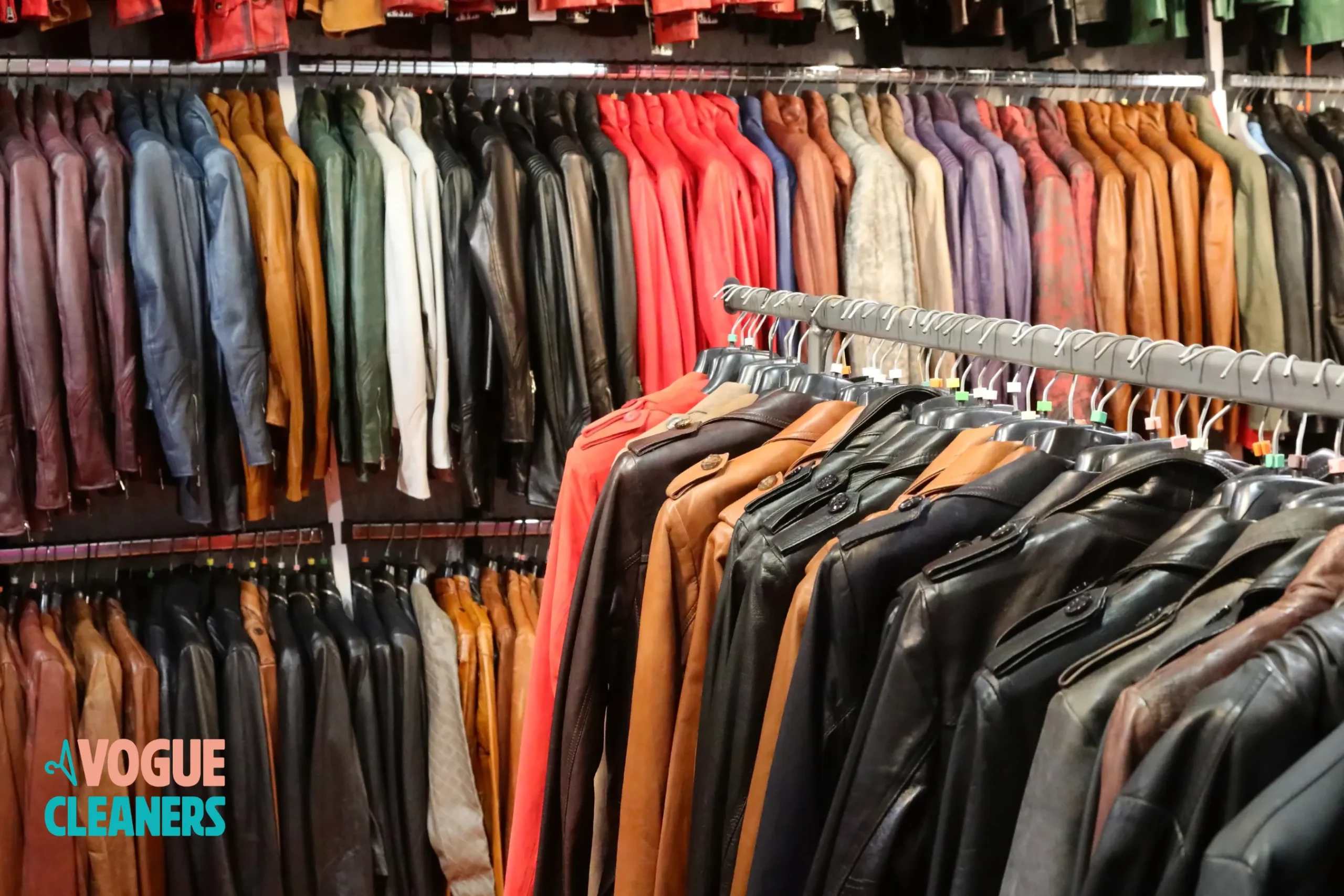
Have you ever pulled your favorite leather jacket out of the closet only to find it stiff, wrinkled, or dull looking? You are definitely not alone. At Vogue Cleaners, we see this situation often. In fact, lately we have been caring for two to three leather jackets every single week. Many of them arrive feeling dry and lifeless, even though they were stored carefully.
Just last month, a customer brought in a leather jacket that had deep creases and a tight, stiff texture. It reminded us of human skin after spending too much time in water and then drying out. The jacket was still beautiful, but it was clearly thirsty for moisture.
How We Care for Your Leather Jacket
For this customer’s jacket, our team carefully applied a specialized leather conditioner in multiple thin layers. Instead of a single heavy application, each pass allowed the conditioner to slowly penetrate the deep fibers of the hide. This restored the leather’s natural flexibility and buttery softness without risk of oversaturation.
This gradual, patient approach is essential; rushing the process or using too much product can lead to uneven results or a sticky surface residue. By taking the time to let the leather “breathe” between applications, we achieved a final result that felt comfortable again. The jacket returned to a natural finish with significantly reduced wrinkles, looking refreshed and ready for years of continued wear.
Why Does Leather Become Wrinkly and Dry?
Leather is a natural material made from animal hide. Just like skin, it needs moisture to stay soft and flexible. Over time, leather can lose its natural oils due to age, dry air, heat exposure, or improper storage. When leather dries out, it begins to shrink slightly. This shrinkage creates wrinkles that look similar to raisins or cracked skin.
Many people assume this means the jacket is ruined or needs aggressive treatment. That is not always true. In most cases, dryness is the main issue, and moisture is the solution.
What is the difference between “Cleaning” and “Restoration?”
We often tell our customers: “We are cleaning specialists, not restoration specialists.” It is important to understand the difference before you trust someone with your garment.
- Restoration often involves dyeing the leather or using harsh chemical strippers to change the color or hide damage. This can be risky and may change the original feel of the jacket.
- Cleaning is our specialty. We focus on removing dirt and replenishing the natural oils. It is a much safer way to maintain the integrity of the piece without using aggressive chemicals that might cause more harm than good.
What is the hardest part about cleaning suede?
Suede is a type of leather, but it is much more porous because the protective top layer of the skin has been removed. This leaves the “nape” a fuzzy texture exposed. If you drop water or oil on suede, it soaks in immediately.
The hardest part about cleaning suede that most customers never guess is that you can’t always “remove” a stain in the traditional sense. Instead, we often have to buff or brush the top layer of the nape out. It is almost like a very gentle version of sanding. Because we are technically removing a tiny bit of the material to get it clean, suede actually has an “expiry date.” Every deep clean wears it down slightly, which is why professional, gentle handling is a must.
The Benefit: Saving Your Investment
Choosing professional leather cleaning instead of harsh restoration helps extend the life of your jacket. Proper cleaning maintains the original texture, prevents cracking, and keeps the leather feeling like a second skin. Many of our customers are pleasantly surprised by how much better their jackets feel after treatment.
Leather jackets are investment pieces, often tied to memories and personal style. Caring for them properly ensures they remain wearable and beautiful for years to come.
If your leather jacket feels dry, stiff, or wrinkled, it may simply need professional care. Schedule a pickup or sign up for Vogue Valet today and enjoy expertly cared-for clothes without the hassle.